Alcazar Of Segovia From Outside: Free Viewpoints And Where To Stand
Where to stand to see the Alcazar of Segovia for free, which viewpoints face the castle, and what the outside gives you without a ticket.
The Alcazar of Segovia is the one building in the city that almost everyone photographs from the outside and then hesitates at the door. The hesitation is reasonable. The castle's ticket covers the palace rooms and the museum, the Torre de Juan II is a separate climb, and the free entry slot that does exist has narrow conditions attached. What many visitors never realise is that the outside is the part the city gives away most generously: a ring of free viewpoints, a riverside meadow, and a wall walk that together frame the castle from nearly every side.
In Short
The Alcazar exterior and its viewpoints are free with no conditions: the Altos de la Piedad, the Cuesta de los Hoyos, the Paseo de Don Juan II, the Pradera de San Marcos and the Mirador de la Canaleja all cost nothing. Free interior entry exists only for European Union citizens, on non-holiday Tuesdays from 14:00 to 16:00, bought in person at the box office and capacity-limited, and the Torre de Juan II is never free. Everything in this article can be done without a ticket.
This question sits inside the Alcazar tickets and the EU free slot guide.
Where Can You See The Alcazar Without Paying?
You can see the Alcazar for free from at least five outdoor points: the Altos de la Piedad, the Cuesta de los Hoyos, the Paseo de Don Juan II, the Pradera de San Marcos and the Mirador de la Canaleja. None charges, none requires a ticket, and none has a closing booth, because they are streets, slopes and open ground rather than attractions.
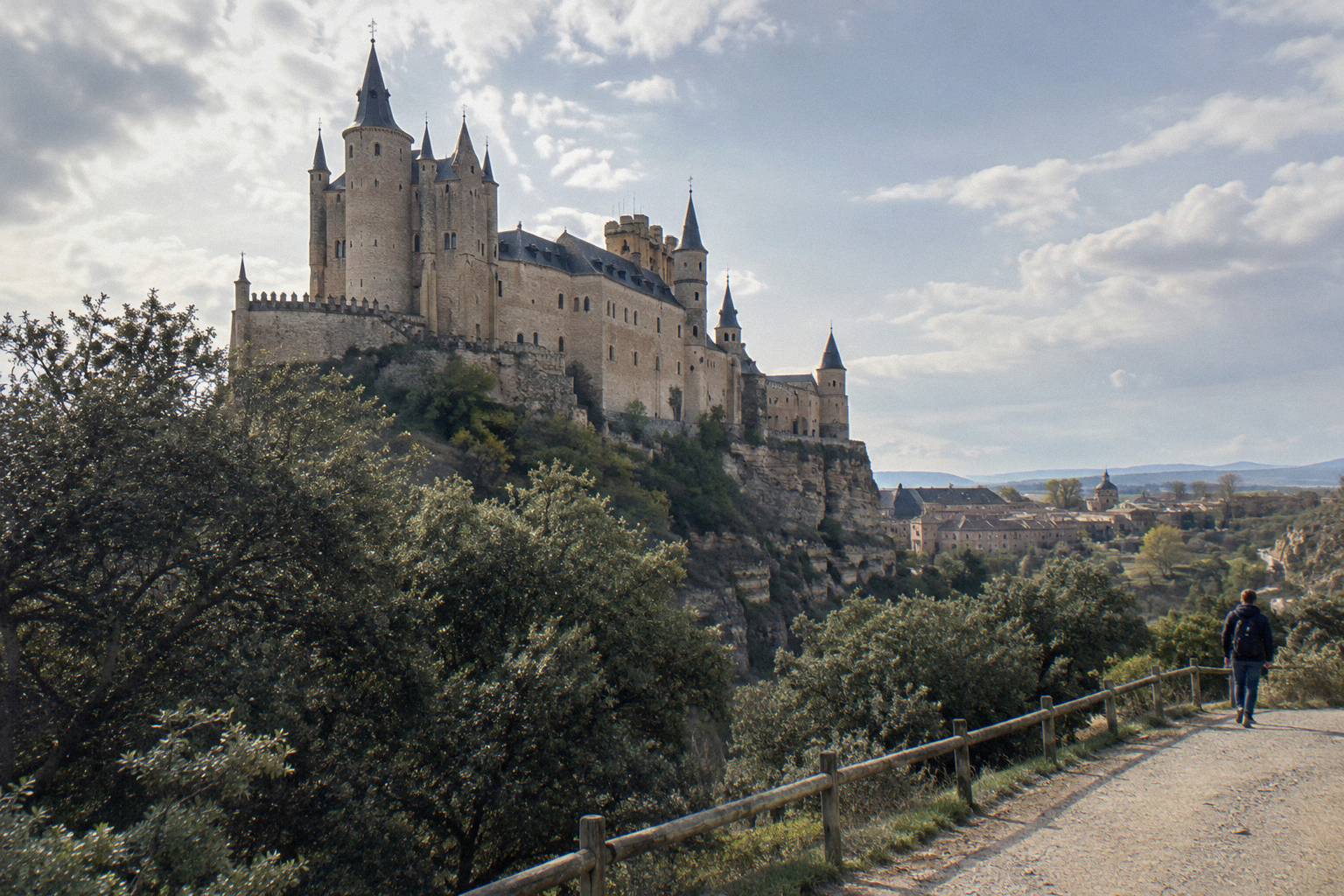
That last point deserves emphasis, because it inverts the usual assumption about castles. At most monuments the interior holds what the exterior promises; at the Alcazar, the exterior is the famous object. The ship-like silhouette, the slate spires, the cliff the building sits on: all of that is public property and open air. A visitor who stands at the Pradera de San Marcos at the river bend sees the full profile that appears on every photograph of Segovia, and pays nothing for it.
The viewpoints fall into two groups. The first group sits inside or beside the old town and needs no planning: the Mirador de la Canaleja is a terrace in the built-up city with a view out over the western suburbs and the Eresma valley, and the Paseo de Don Juan II is the road that curves around the base of the castle rock itself. The second group sits across the river and takes a short descent to reach: the Cuesta de los Hoyos, the Altos de la Piedad above it, and the Pradera de San Marcos, the meadow at the bend of the Eresma that gives the classic full-length view.
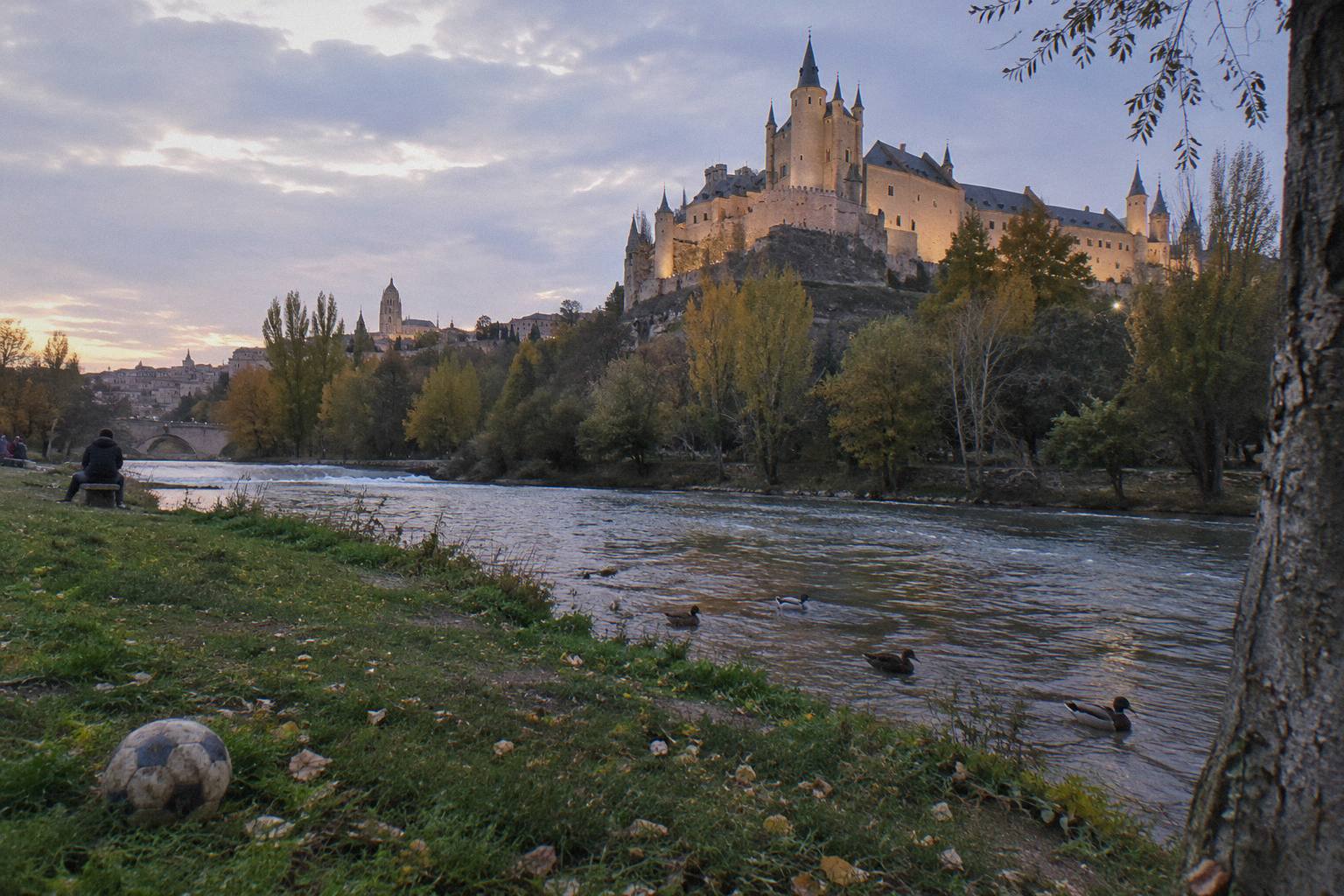
It helps to fix the geometry in your head before setting out. The Alcazar stands at the western tip of the walled city, where the ridge drops steeply on three sides to the Eresma river. That means the castle is surrounded on the north, west and south by low ground with natural sightlines up at it, while the east side, facing the old town, is where the building connects to the city and offers the least. The viewpoints exploit the drop: you look up at the castle from below, and the river frames the bottom of the picture.
| Free viewpoint | Position relative to the castle | What it shows |
|---|---|---|
| Mirador de la Canaleja | Old town, east of the castle | The Eresma valley, the western suburbs and the Alcazar from above |
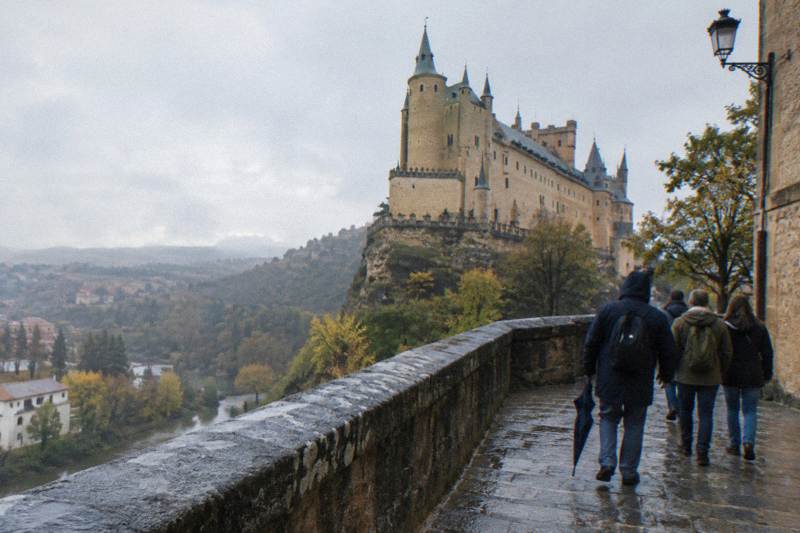
| Paseo de Don Juan II | Directly beneath the walls | The base of the castle rock and the walls at close range |
| Cuesta de los Hoyos | Across the river, below | The castle rising over the valley slope |
| Altos de la Piedad | Above the Cuesta de los Hoyos | An elevated angle over the river bend toward the spires |
| Pradera de San Marcos | Meadow at the river bend | The full ship-like profile, the classic photograph |
One boundary matters here and it is not a fence. The free status of these viewpoints never passes to the building they look at. Entry to the Alcazar is a separate ticket at all times except the European Union citizen slot described later in this article, and no viewpoint, walk or square includes, enters or unlocks any part of the interior. The two experiences, outside and inside, are simply different products, and the outside is the free one.
Which Viewpoints Face The Castle?
The viewpoints facing the castle directly are the Paseo de Don Juan II under the walls on the near side of the Eresma, the Cuesta de los Hoyos and the Altos de la Piedad on the far side, and the Pradera de San Marcos at the river bend. The Mirador de la Canaleja faces the valley, giving height and context instead of a head-on view. Each position produces a genuinely different photograph.
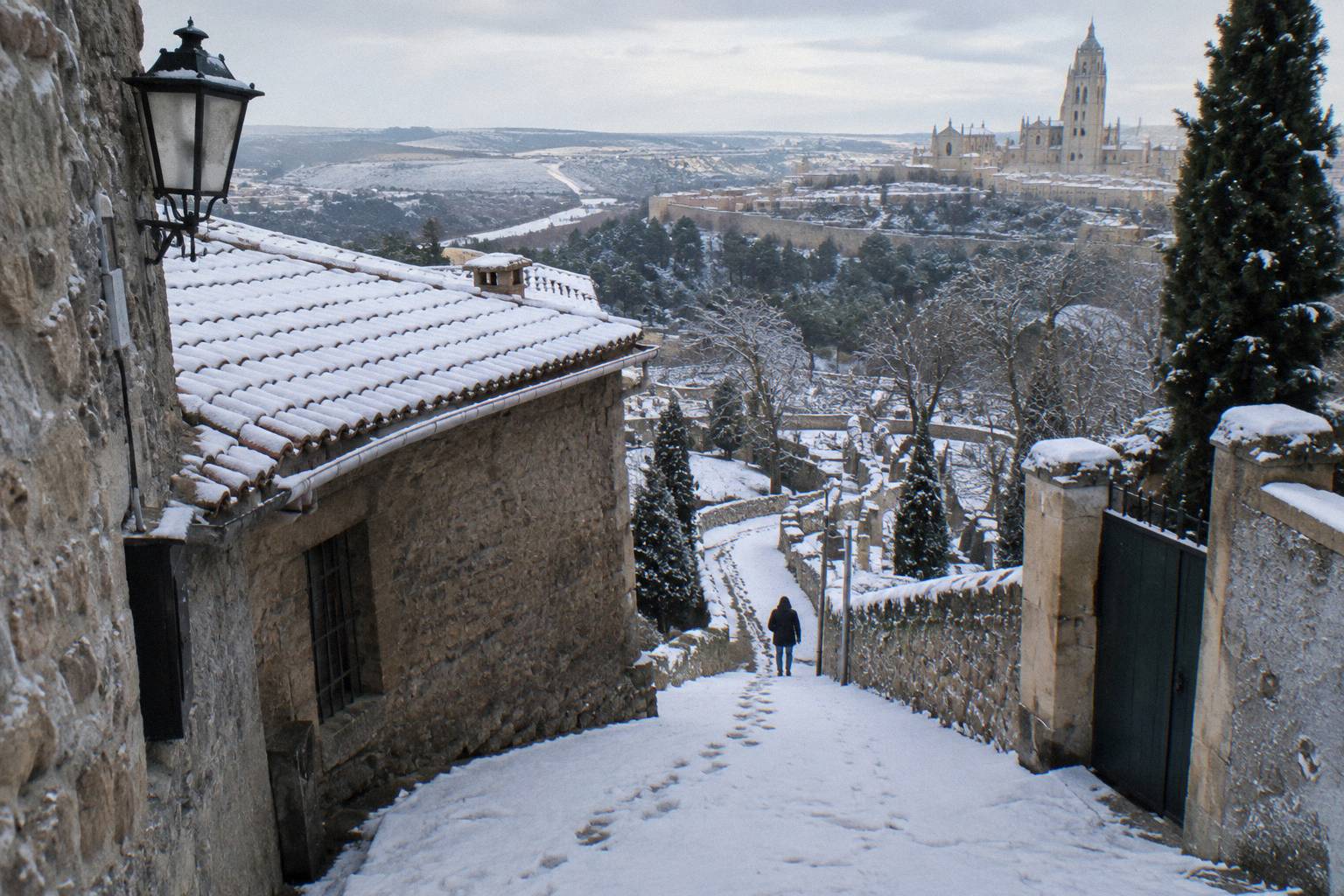
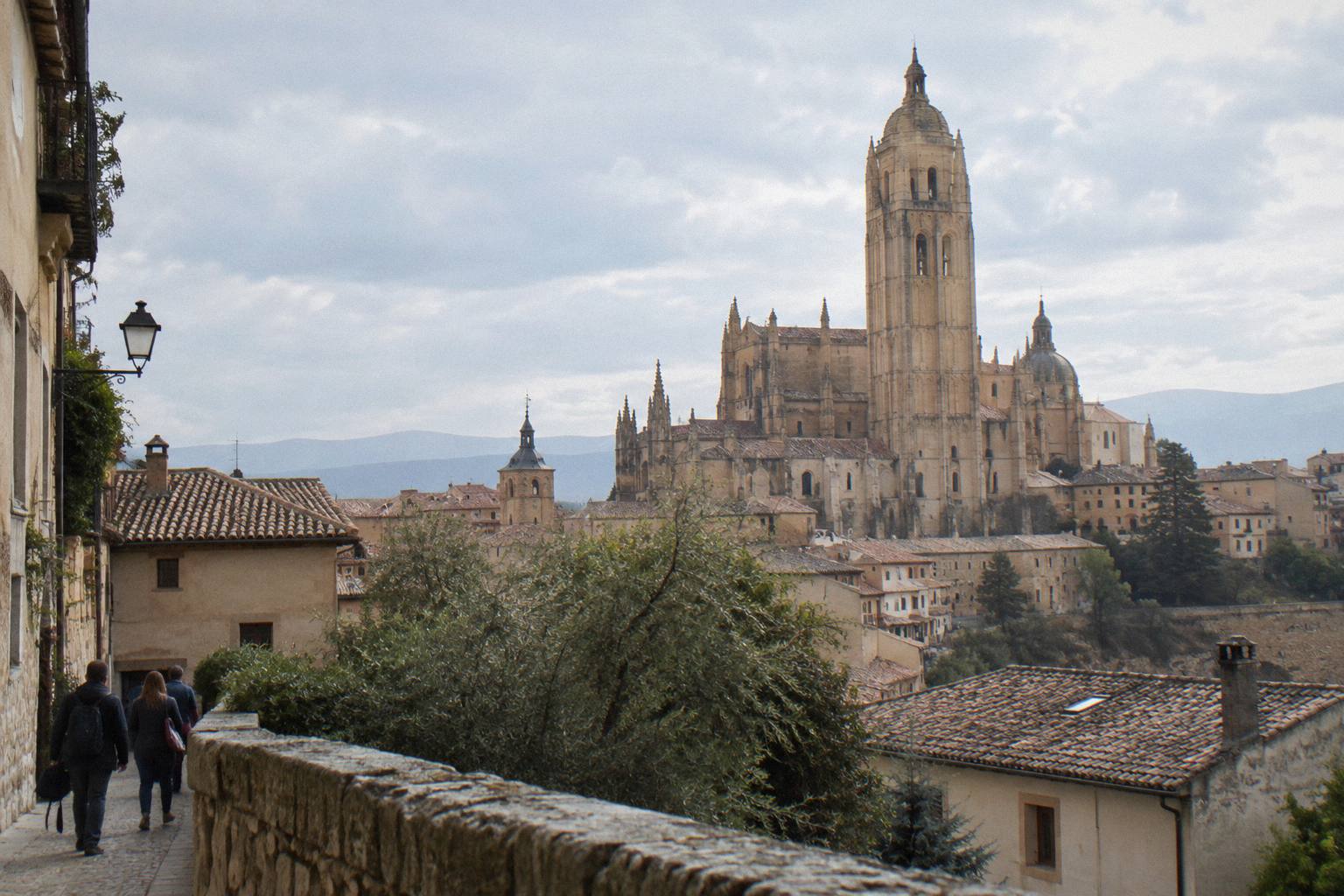
Start with the Paseo de Don Juan II, because it is the closest free position to the building. The road curves around the foot of the rock on which the Alcazar stands, keeping the walls above you. From here the castle is not a silhouette but a structure: you see the masonry, the height of the cliff, and the way the building meets its foundation. This is also the position where the scale registers, since the towers stop being a distant profile and become architecture overhead. Nothing about this road requires a ticket or a schedule.
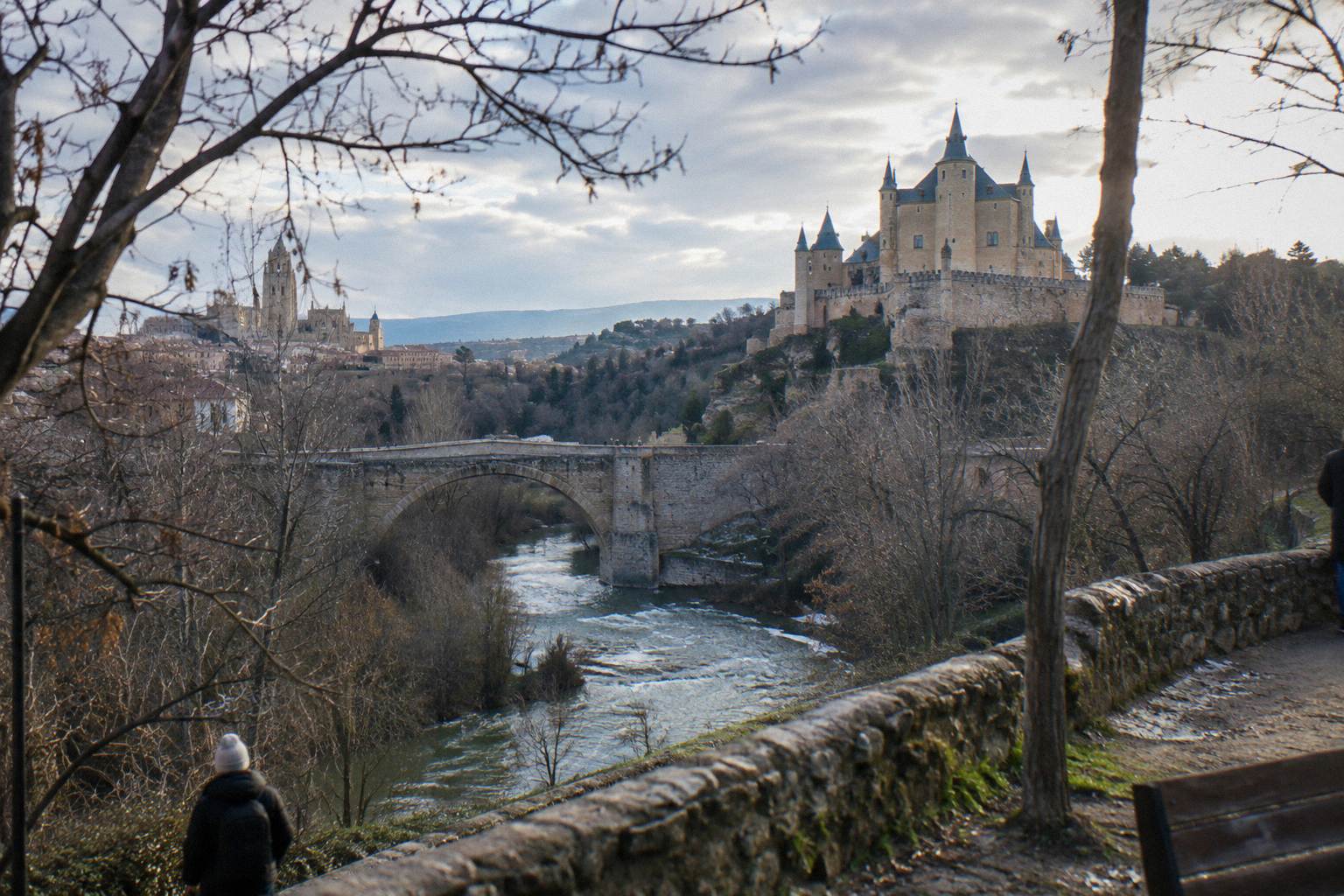
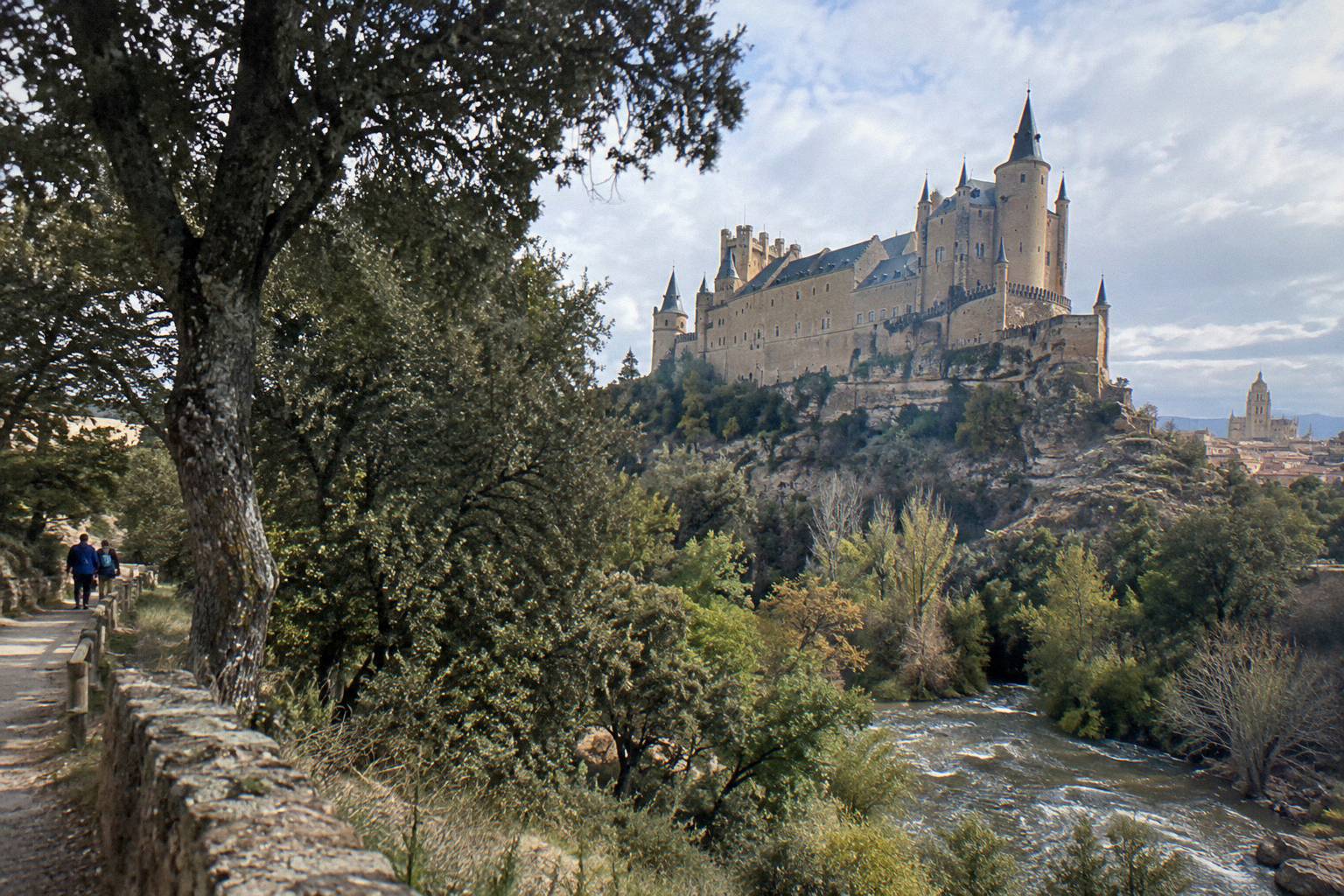
Cross the Eresma and the picture changes completely. The Cuesta de los Hoyos is the slope on the far bank, and from its lower reaches the castle appears above the valley, framed by trees and the river line. Climb to the Altos de la Piedad and the angle lifts: the viewpoint sits high enough to look across the bend toward the spires, with the river below and the western face of the building turned toward you. Between the two, you cover the low and the mid angle from the same side of the valley.
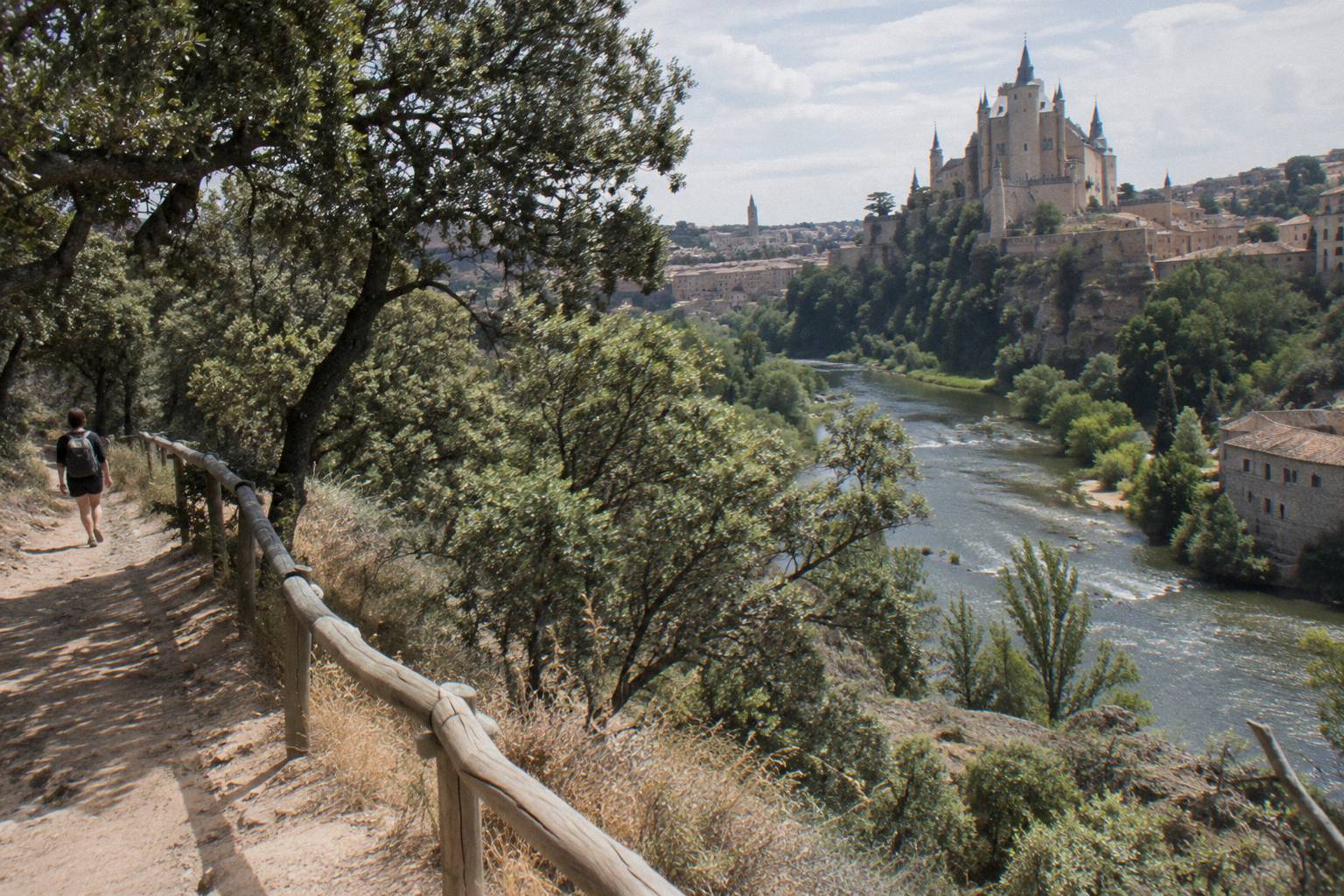
The Pradera de San Marcos is the one that faces the castle most completely, and it earns its own section below. For now, note why the list of facing positions is longer than most visitors expect: the castle stands on a promontory, so nearly every point of low ground around it faces some part of it. The Eresma river paths connect several of these positions in a continuous free walk, which makes it possible to see the building from three or four angles in a single loop without ever retracing steps.
The Mirador de la Canaleja plays a different role. It looks out over the valley and the western edge of the city from inside the old town, so the Alcazar appears within a wider panorama rather than as the subject. It earns its place on the list for two reasons: it is the easiest viewpoint to reach on a route through the city, and it is the one that shows how the castle sits in the landscape, with the Eresma valley spreading below it. Treat it as the establishing shot and the riverside positions as the close-ups.
For anyone who wants the viewpoints explained on the ground rather than mapped on paper, the city's free walks cover this neighbourhood. There are 2 free walking tours in English (1 on GuruWalk, 1 on freetour.com). The GuruWalk walk, Segovia is a different story (Small groups), is an English-language walk of 1 hour 30 minutes, rated 4.7 out of 5 across 10 GuruWalk reviews, run by the guide Patricia and meeting at Plaza del Azoguejo, next to the tourist office, in the Aqueduct And Old Town neighbourhood. The freetour.com walk, Free Tour through the Monumental Segovia, runs in English and Spanish for 1 hour 30 minutes and meets at Calle Fernán García, corner of Ochoa Ondategui; it is rated 9.2 out of 10 across 126 freetour.com reviews. Both are free to join, pay what you want.
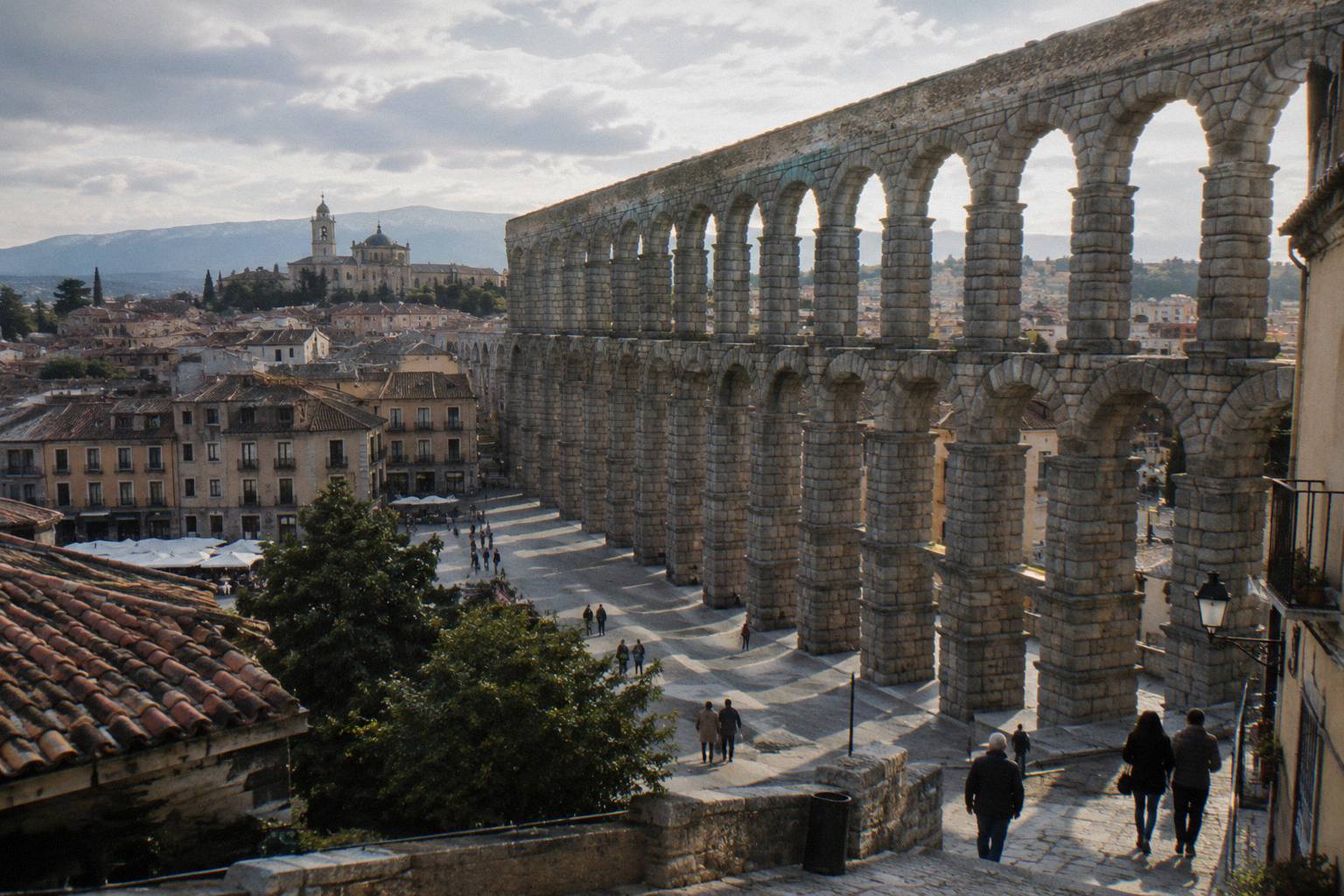
Why Is The Pradera De San Marcos Worth A Stop?
The Pradera de San Marcos is the meadow at the bend of the Eresma directly opposite the Alcazar, and it gives the fullest free view of the castle anywhere in the city: the entire western profile, towers and spires together, seen from across the water. It costs nothing, it is open ground rather than a monument, and no other free viewpoint shows the whole building in one frame.
The reason is the angle. The castle's long axis runs with the ridge, and the river bends around its western tip, so from the Pradera de San Marcos you stand far enough back and far enough to the side to take in the full length of the building. The closer viewpoints under the walls show you parts of the castle magnificently; the meadow shows you the whole of it, with the cliff, the river and the sky arranged around it. That composition is the picture on the postcards, and it assembles itself for free.
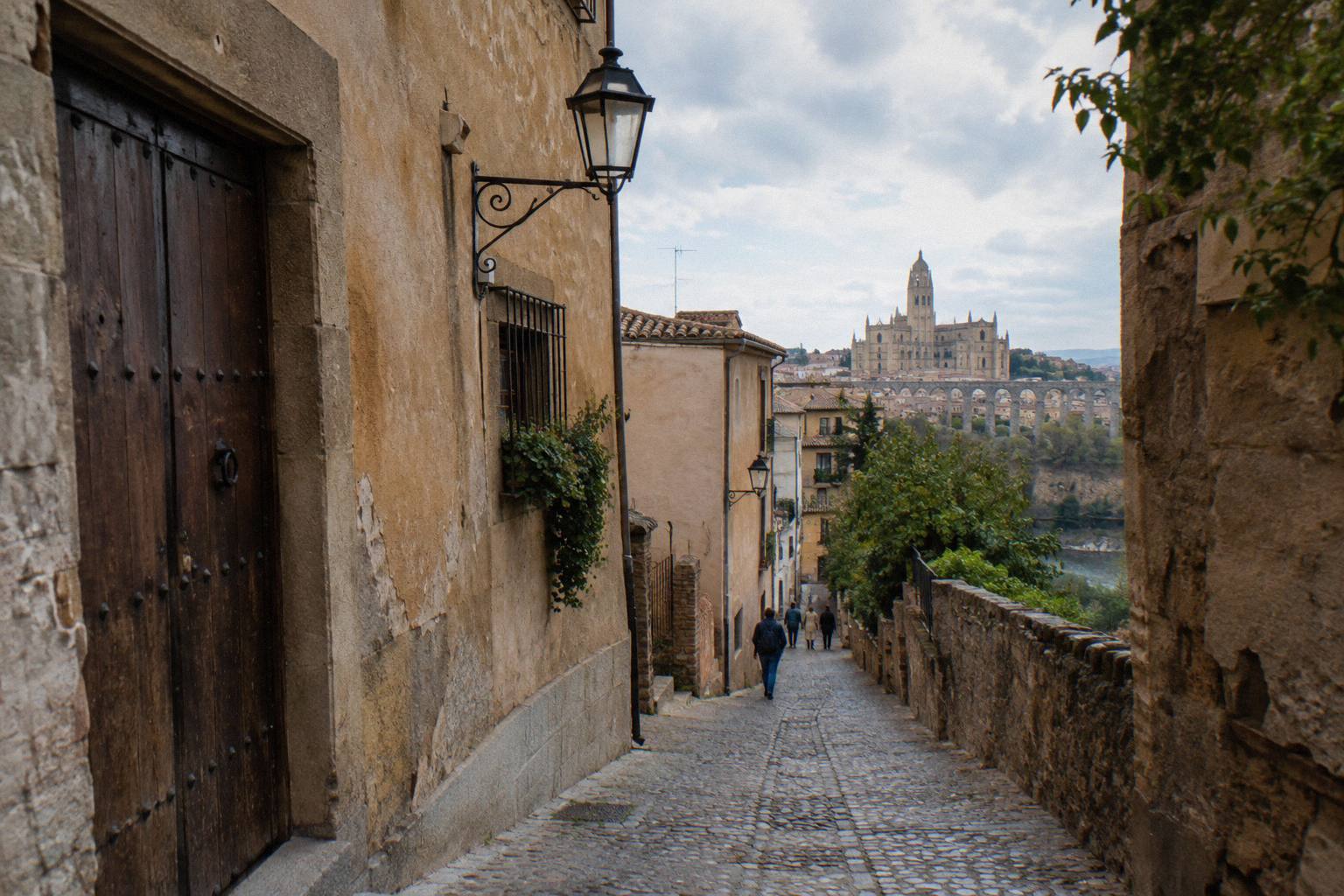
The meadow is also the most comfortable place to spend time. The riverside positions on the far bank are slopes and roads, good for a view and a photograph but not for lingering. The Pradera is open ground at the water's edge, and the Eresma river paths run through and past it, connecting it toward the Alameda del Parral and the Jewish cemetery viewpoint at El Pinarillo further along the valley. A visitor planning a slow circuit of the free viewpoints can treat the meadow as the turning point of the walk, the place to stop longest.
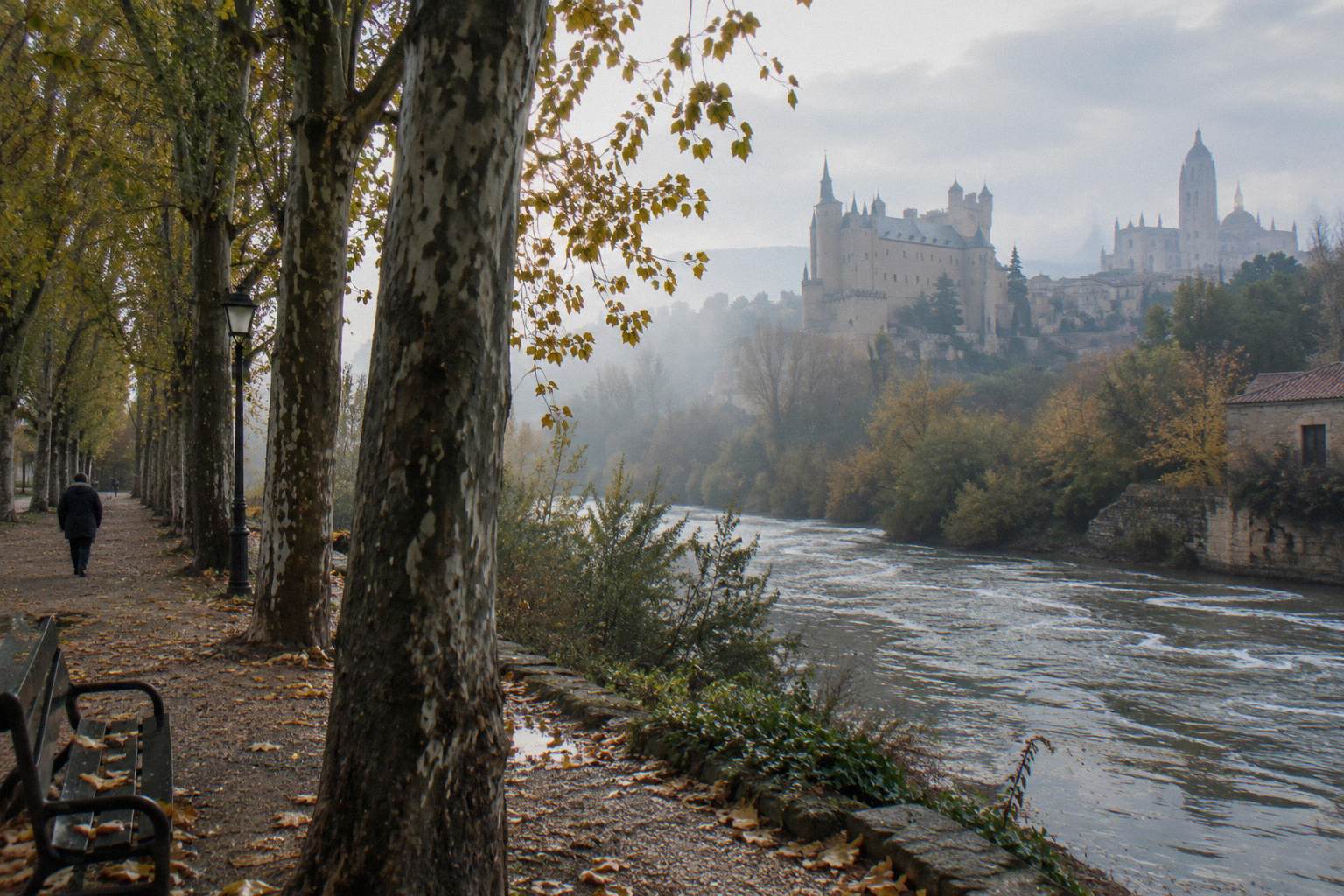
A note on what the meadow does not do: it does not put you inside anything. The castle across the water remains a ticketed building, and the free status of the meadow, the riverbank and the paths is their own, not a doorway. Visitors sometimes assume that reaching the base of the rock via the river paths leads somewhere free; it leads to the Paseo de Don Juan II and the exterior walls, described above, and no further.
For walkers coming from the old town, the Pradera also marks the natural junction of two free experiences: the river valley and the wall walk. The Paseo de la Muralla, the walk along the city walls, is free, and its towers and ramparts give yet another angle on the castle district from above. The wall walk's own interior highlight, the Puerta de San Andres, is ticketed inside, exactly the pattern that repeats across Segovia, and the walking the Segovia city walls piece covers that split in detail. The walls outside, the gate interior paid: same rule as the castle meadow and the castle door.
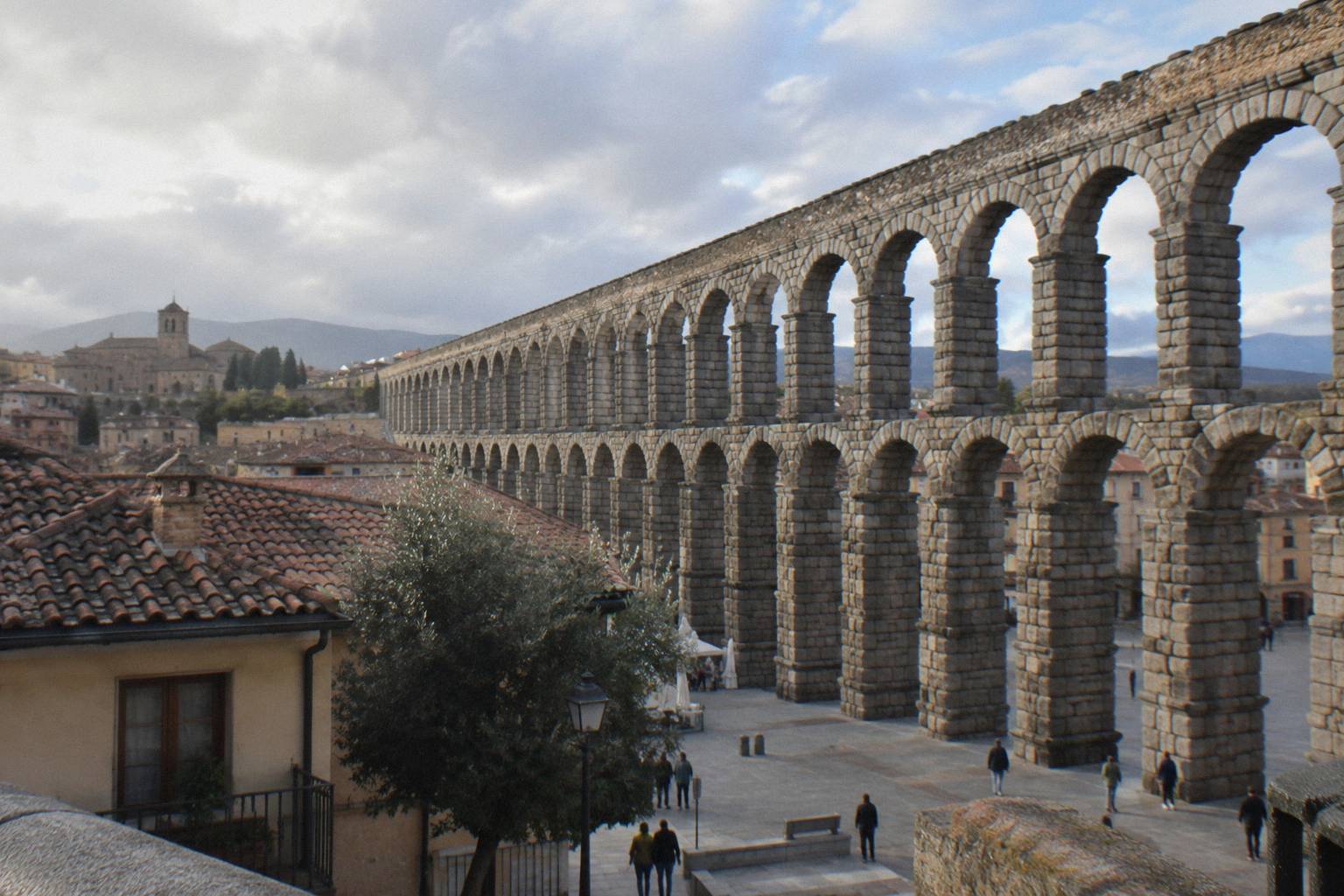
How Do You Walk From The Old Town To These Viewpoints?
The walk from the old town to the riverside viewpoints descends from the western edge of the walled city, crosses the Eresma, and returns along the river paths to the Pradera de San Marcos and the paths toward the Alameda del Parral. The Mirador de la Canaleja sits on the descent itself, and the whole loop uses streets, a riverside road and open paths, with no ticketed section anywhere along it.
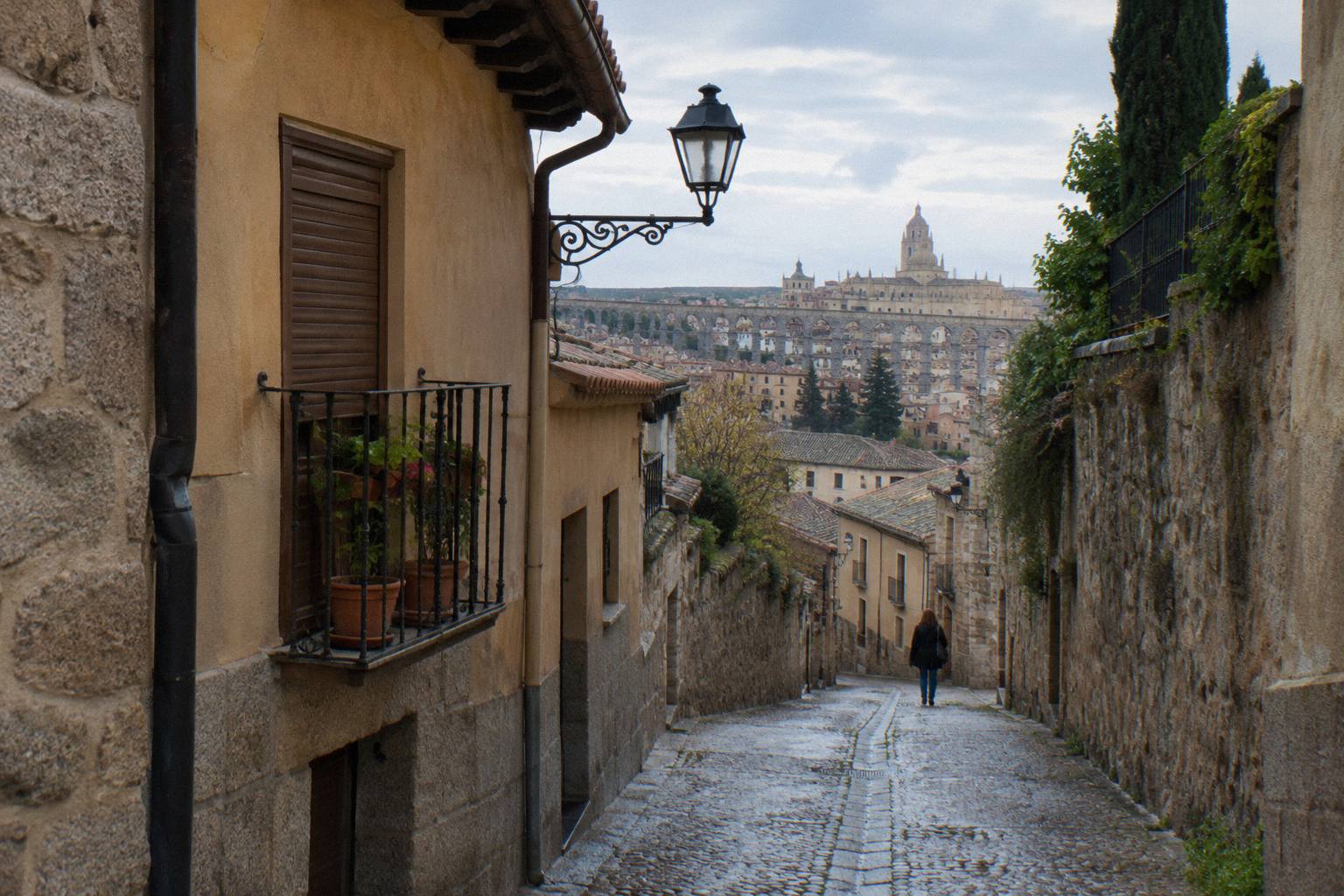
The descent begins at the city's western tip. Follow Calle Juan Bravo from the Aqueduct toward the Plaza Mayor and the castle, and the ridge narrows as the walls close in on both sides. The Mirador de la Canaleja sits on this stretch, a terrace opening westward over the valley, and it is the last viewpoint before the ground falls away. From there the streets step down the slope toward the river, and the Paseo de Don Juan II waits at the bottom, curving under the castle walls on the near bank.
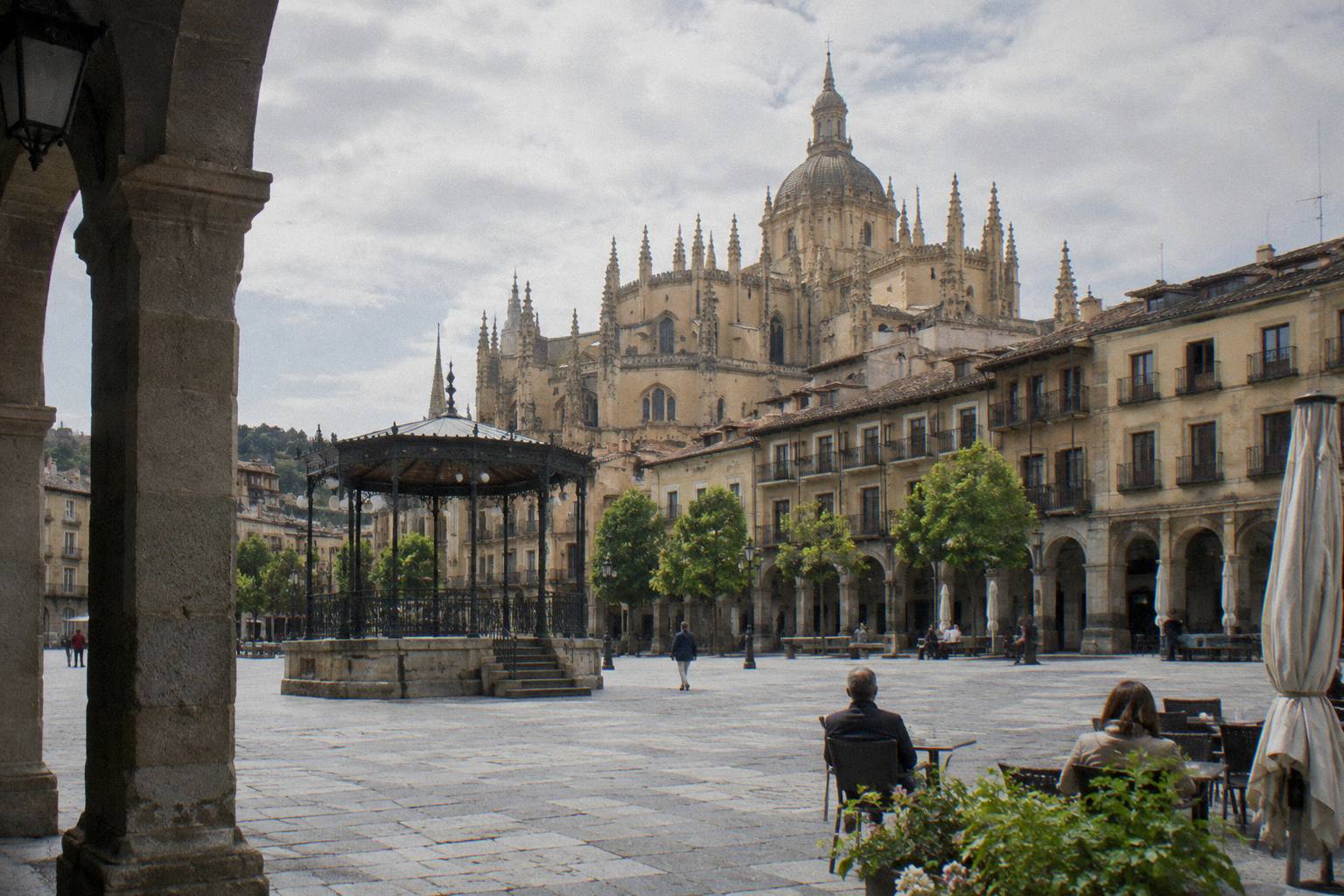
Crossing the Eresma puts you on the far side, where the Cuesta de los Hoyos climbs the opposite slope and the Altos de la Piedad top it. The river paths then lead downstream, following the bend toward the Pradera de San Marcos. This is the section that feels least like a city walk and most like open country: water on one side, valley slope on the other, and the castle receding behind you at each step, then reappearing in full profile when the path rounds the bend into the meadow.
| Section of the loop | Free status | Notes |
|---|---|---|
| Calle Juan Bravo to the Mirador de la Canaleja | Free street and terrace | Viewpoint is in the old town, before the descent |
| Descent to the Eresma | Free streets | Ground drops from the walled ridge to the river |
| Paseo de Don Juan II | Free road | Runs beneath the castle walls, near bank |
| Cuesta de los Hoyos and Altos de la Piedad | Free slope and viewpoint | Far bank, low and high angles on the castle |
| Eresma river paths to the Pradera de San Marcos | Free paths and meadow | Full-profile viewpoint at the river bend |
The loop can be walked in either direction, and the choice changes the light and the order of the views rather than the content. Going down through the old town first means the castle views build from close-up to full profile; starting at the Pradera means you meet the complete silhouette first and then approach it. Nothing on the route has opening hours, because nothing on the route is an institution.
For visitors building a whole day around free Segovia, this loop connects to two more free threads: the wall walk back up in the city, described in the free walking tour routes and stops guide, and the valley continuation toward El Pinarillo and the Alameda del Parral. The whole circuit is one of the reasons a day built on free sights in Segovia does not feel like a compromise, a point the free things to do in Segovia in one day itinerary makes in full.
And for anyone who prefers the city with a guide's voice on it, this is the ground of the two English free walks. Both meet in the Aqueduct And Old Town neighbourhood at the eastern end of the same ridge, and both are free to join, pay what you want, reserved through their own pages on GuruWalk and freetour.com respectively. The Free Things To Do In Segovia directory lists both with their meeting points and durations.
What Do You Miss If You Skip The Interior?
Skipping the interior means missing the palace rooms and the museum inside the Alcazar, which the paid ticket covers, and the view from the Torre de Juan II, a separate climb that is never free. It does not mean missing the castle's appearance, silhouette, cliff or viewpoints, which are outside and free. The only free interior access is the European Union citizen slot on non-holiday Tuesdays from 14:00 to 16:00, at the box office, capacity-limited.
Be precise about what the paid ticket buys, because the marketing of castles blurs it. Inside, the visit covers the palace rooms and the museum collection; those are the substance of the ticket. The tower is the other paid piece, and it is the one that trades on the panorama, since climbing it puts you above the very viewpoints described earlier in this article. Visitors who have already walked the Pradera, the Piedad and the walls have seen the castle and the valley from several free elevations; the tower adds one more, from the building itself.
The free slot deserves its exact conditions, because it is the most misrepresented fact about the Alcazar. Free entry to the palace and museum runs on non-holiday Tuesdays from 14:00 to 16:00, it applies only to citizens of the European Union, tickets are bought individually at the box office during that window, and capacity is limited, so arrival within the window does not guarantee entry. Visitors from outside the European Union pay at all times. The Torre de Juan II has no free slot at all, in any window, for anyone.
Set the interior against the outside honestly and the decision usually makes itself. If painted ceilings, armour and state rooms are the point of the trip, the ticket is the product and no viewpoint substitutes for it. If the point is the building as it stands in the landscape, the outside delivers that entirely for free, and the money saved is real. Many visitors split the difference: the viewpoints in full, the interior only if the Tuesday window or the interest aligns.
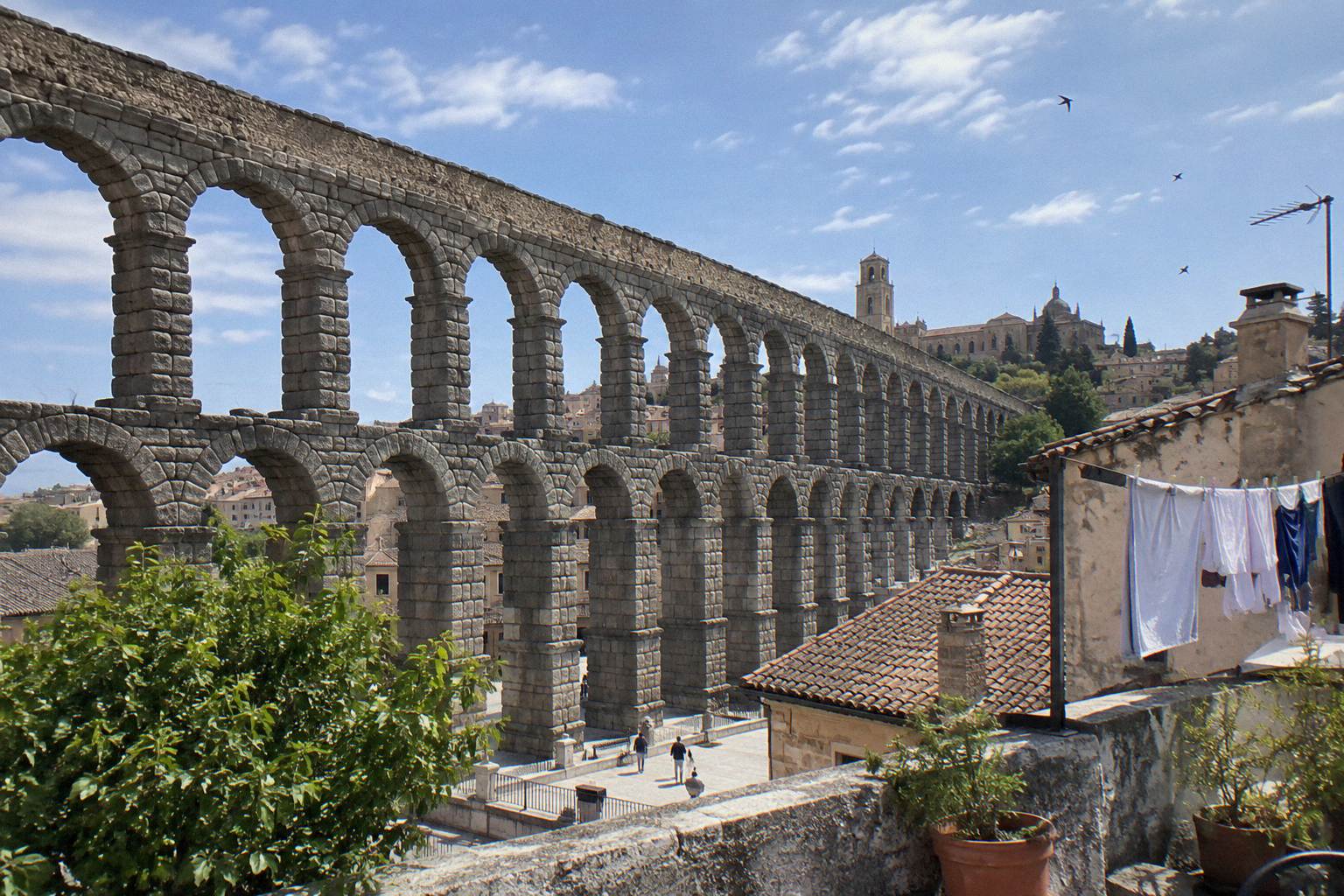
The same free-outside, paid-inside pattern repeats across the monuments nearby, and knowing it saves repeated disappointment. The Cathedral's exterior and its Plaza Mayor frontage are free to see; the usual Cathedral visit is 4 EUR, the guided tower visit is 7 EUR, and the only free entry to the church is Sunday worship hours, 09:00 to 10:00 from April to October and 09:30 to 10:30 from November to March, church only with the cloister closed. The Roman Aqueduct is free; the Aqueduct Interpretation Centre is inside the 5 EUR Real Casa de Moneda ticket. The Muralla walk is free; the Puerta de San Andres interior is ticketed. The Alcazar is simply the largest member of the same family.
| Alcazar element | Free or paid | Condition |
|---|---|---|
| Exterior walls and all viewpoints | Free | No conditions, no schedule |
| Palace rooms and museum | Paid ticket | Free only for EU citizens, non-holiday Tuesdays 14:00 to 16:00, box office, capacity-limited |
| Torre de Juan II | Paid, always | Never free, including the Tuesday window |
| Pradera de San Marcos and river paths | Free | Open ground |
| Paseo de Don Juan II | Free | Public road |
One practical note about the tower: its price is not published on an official page, so this article does not print one, and any figure seen elsewhere should be treated with caution. The same caution applies to the general Alcazar ticket price. The palace and museum content is the certain part of the ticket; the numbers belong to the box office.
Mistakes That Trip People Up At The Alcazar Viewpoints
The recurring mistakes are treating the viewpoints as a route into the castle, assuming the Tuesday free slot applies to everyone, expecting the tower to be part of any free entry, and trying to see the castle only from the old town side, where the building connects to the city and shows least. Each mistake comes from assuming the free outside and the paid inside are one place. They are two, and the viewpoints belong entirely to the first.
The first mistake is the doorway assumption. The riverside paths lead to the base of the castle rock, and some visitors expect that base to lead further, to a courtyard or a free hall. It leads to the Paseo de Don Juan II and the exterior walls, and stops there. The viewpoint walk is complete in itself; it is not a queue for the interior.
The second is the Tuesday slot, which trips people in both directions. Some hear "free Tuesday" and arrive expecting entry as of right; the free window is for European Union citizens only, on non-holiday Tuesdays, from 14:00 to 16:00, with tickets bought individually at the box office and capacity limits that can close the window early. Others assume the slot must cover the tower too. It covers the palace and museum; the Torre de Juan II is paid at all times, in all windows, for everyone.
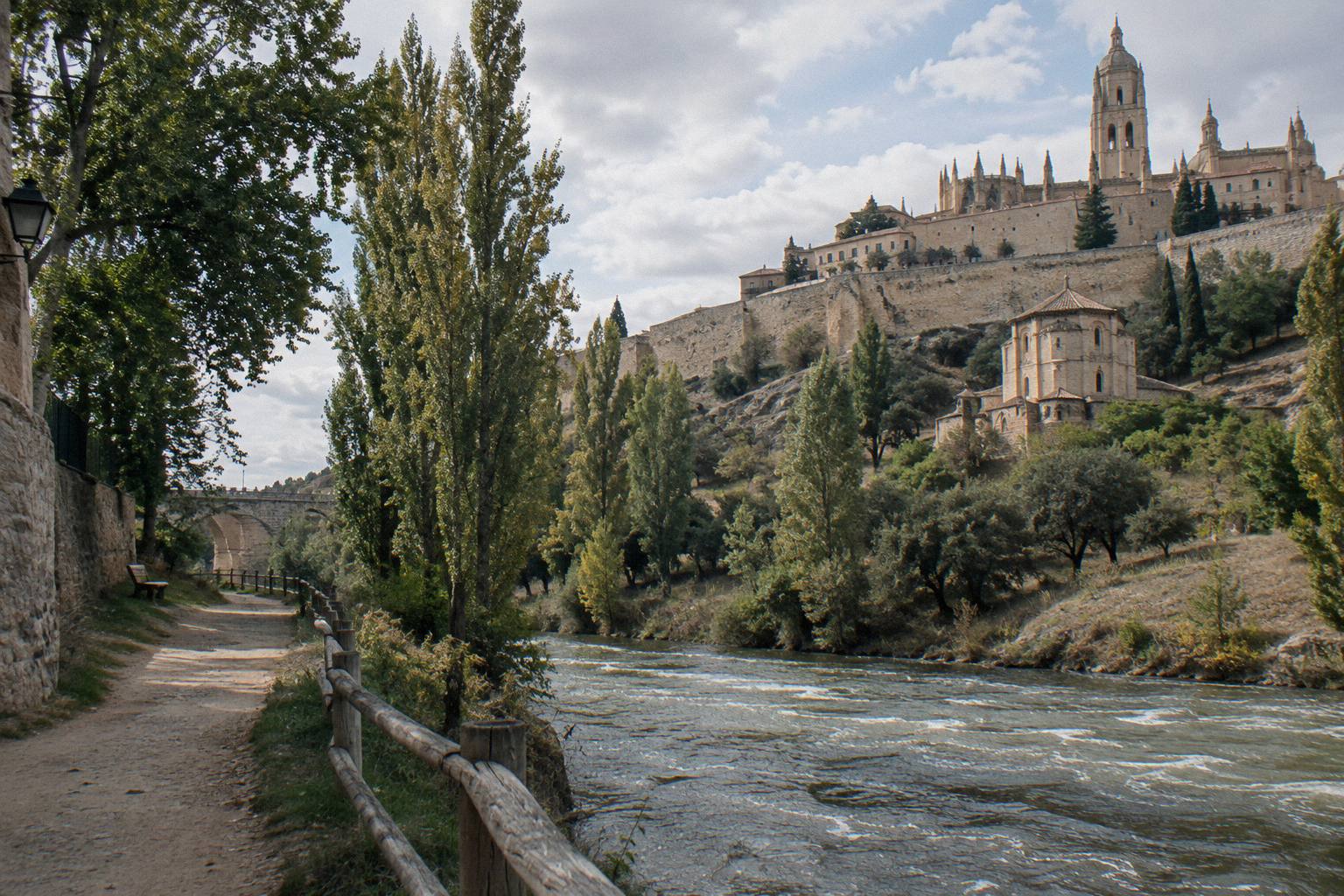
The third mistake is spending the whole visit on the eastern side. The old town side of the Alcazar is the joined side, where the building meets the ridge, and it shows the least: an entrance front rather than the profile. The famous silhouette exists only from the valley, so a visitor who never crosses the Eresma has, in a real sense, not seen the castle. The Mirador de la Canaleja on the way down gives the panorama, but the river bend gives the building.
The fourth is forgetting that the light matters more than the position, and the position list above is short enough to repeat: Canaleja for context, Don Juan II for scale, the Piedad for the elevated angle, the Pradera for the whole profile. The valley walk between them is free, so there is no cost to choosing the hour and no penalty for doing the loop more than once.
Common Questions About The Alcazar Of Segovia From Outside
Is The Alcazar Of Segovia Visible For Free?
Yes, fully. The exterior walls and every viewpoint around the castle, including the Altos de la Piedad, the Cuesta de los Hoyos, the Paseo de Don Juan II, the Pradera de San Marcos and the Mirador de la Canaleja, are free with no conditions. Only the interior, the palace rooms and museum, is ticketed, with free entry limited to European Union citizens on non-holiday Tuesdays from 14:00 to 16:00.
Where Is The Best Free Viewpoint For The Alcazar?
The Pradera de San Marcos, the meadow at the bend of the Eresma river, gives the fullest free view: the entire western profile of the castle in one frame, from across the water. The Altos de la Piedad above the Cuesta de los Hoyos gives a higher, closer angle, and the Paseo de Don Juan II runs directly beneath the walls.
Can You Walk Around The Alcazar Without A Ticket?
Yes. The Paseo de Don Juan II curves around the base of the castle rock on the near side of the Eresma, and the river paths, the Cuesta de los Hoyos and the Pradera de San Marcos complete a free loop around the building's western side. None of it requires a ticket. The interior is separate and paid.
Is The Alcazar Ever Free To Enter?
Only for citizens of the European Union, on non-holiday Tuesdays from 14:00 to 16:00, when free entry to the palace and museum is bought individually at the box office and limited by capacity. Visitors from outside the European Union pay at all times. The Torre de Juan II is never free for anyone, including in that window.
How Long Does The Viewpoint Walk Take?
The loop from the old town down through the Mirador de la Canaleja, along the Paseo de Don Juan II, across the Eresma to the Cuesta de los Hoyos and the Altos de la Piedad, and back along the river paths to the Pradera de San Marcos is an unhurried circuit of streets, slope and riverside path. There are no opening hours anywhere on it, so the pace is entirely yours to set.
Do The Free Walking Tours In Segovia Cover The Alcazar?
The English free walks, of which there are 2 free walking tours in English (1 on GuruWalk, 1 on freetour.com), are based in the Aqueduct And Old Town neighbourhood, meeting at Plaza del Azoguejo and at Calle Fernán García respectively, each running 1 hour 30 minutes. Their meeting points and neighbourhoods are published on their own pages; neither includes entry to the Alcazar, which is a separate ticket.
What Does The Alcazar Ticket Cover?
The paid ticket covers the palace rooms and the museum inside the Alcazar. The Torre de Juan II is a separate climb and is never free. The ticket's price is not published on an official page, so check with the box office for the current figure before planning the interior visit around a number.