Walking The Segovia City Walls And Free Gates
How the free Muralla walk along Segovia's city walls works, which gates you can pass for free, which interiors are ticketed, and how the walls link the Aqueduct to the Alcazar.
In Short
The Muralla walk, the Paseo de la Muralla, is free to walk, and so are the wall gates you pass through in the course of it: the Puerta de San Andres is the one whose interior and museum are ticketed. The walls tie the Aqueduct, the Juderia and the Alcazar viewpoints into one free route, with the Cathedral visit at 4 EUR and the tower at 7 EUR as the paid interiors nearby. This city offers 2 free walking tours in English (1 on GuruWalk, 1 on freetour.com), and both meet inside the ground the walls once closed.
This question sits inside the Segovia walking routes and free guides guide.
Quick Facts
| Question | Answer |
|---|---|
| Is the Muralla walk free? | Yes, the Paseo de la Muralla is free to walk |
| Are the wall gates free to pass? | Yes, passing through the gates is free |
| Is the Puerta de San Andres interior free? | No, the interior and its museum are ticketed |
| Cathedral visit price | 4 EUR, tower visit 7 EUR guided |
| Real Casa de Moneda ticket | 5 EUR, free on non-holiday Wednesdays |
| Free walks covering this ground | 2 free walking tours in English (1 on GuruWalk, 1 on freetour.com) |
Walking The Segovia City Walls And Free Gates
The walls of Segovia form a free walking circuit, the Paseo de la Muralla, that anyone can walk without a ticket, and the gates set into that wall are equally free to pass through on foot. The paid parts sit behind the wall: the Puerta de San Andres interior and museum, the Cathedral, the Real Casa de Moneda, and the Alcazar beyond the EU-citizen Tuesday slot. Knowing which side of each door is free is the whole game here.
The wall is the frame that holds the old town together. It runs down from the high ground near the Alcazar, follows the line where the plateau drops to the Eresma river valley, and climbs back toward the Aqueduct and the Juderia. Walking it costs nothing at any point along the public path. What changes from door to door is only what happens when you step inside a structure that stands in or on the wall, and there is exactly one such structure on this route whose interior asks for a ticket.
This article walks the line in order: how the Muralla path itself works, what along it is genuinely free, which gates you can pass without paying, what behind the walls is ticketed and on what conditions, and how the whole circuit ties back into the old town that most visitors come for. Along the way it points at the two free walking tours in English that cover this same neighbourhood, one on GuruWalk and one on freetour.com, both meeting within the ground the walls enclose.
How Does The Muralla Walk Work?
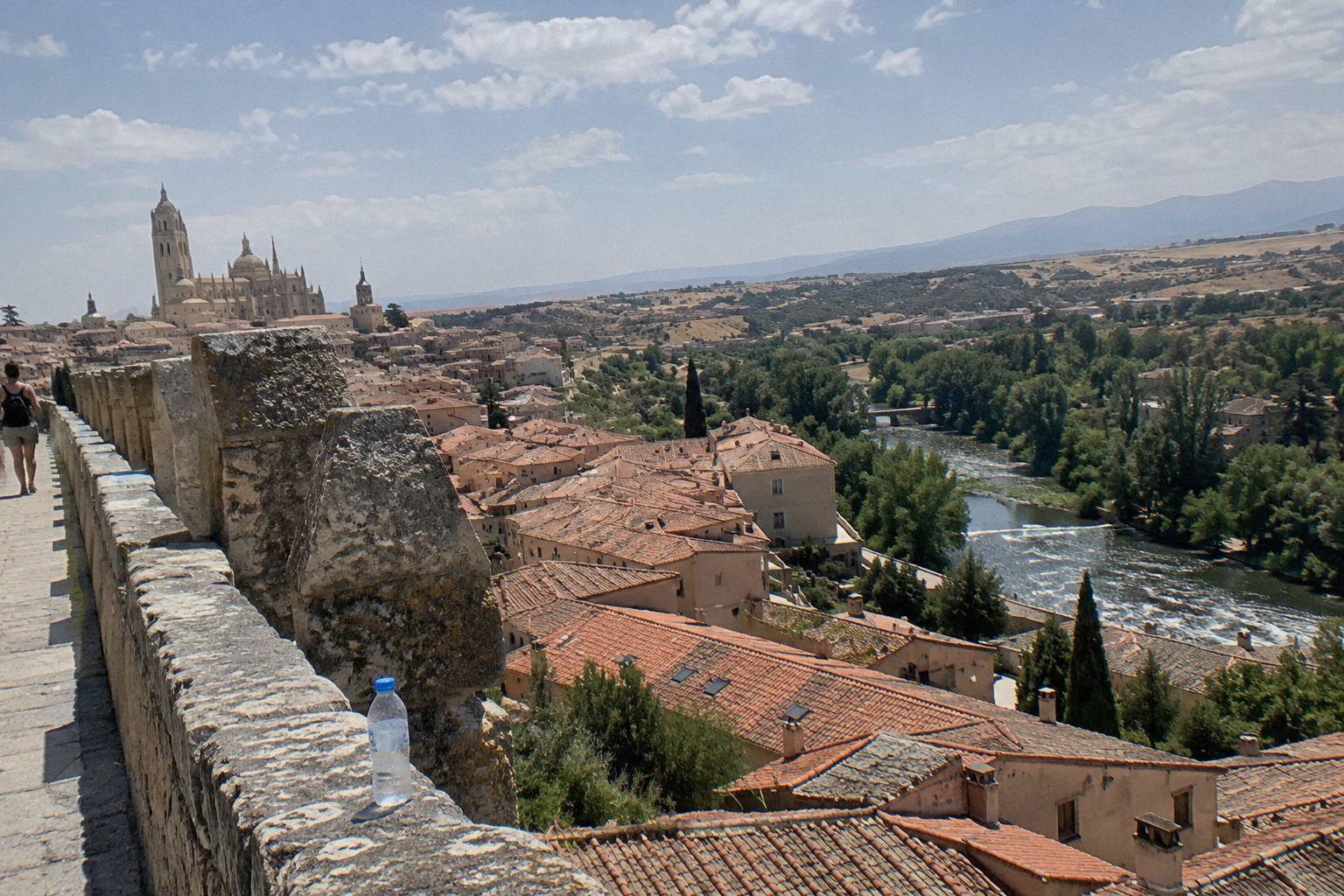
The Muralla walk, the Paseo de la Muralla, is a free public path that follows the top of the city wall along the valley edge of the old town. There is no ticket, no gate fee and no booking for the path itself: you walk on, you walk off. The only charged element anywhere along the wall is the interior of the Puerta de San Andres, which is a separate museum visit.
The walk belongs to the city's public ground, the same as a plaza or a street. That has practical consequences. There is no opening kiosk, no queue for a wall ticket and no timed entry, because there is nothing to sell. The path simply exists, and the free status of the wall itself never transfers to the buildings that sit in it or beside it. That is the first of the paired facts this article keeps repeating, because it is the one that catches people out: the Muralla walk is free, and the Puerta de San Andres interior is ticketed, in the same sentence and never merged.
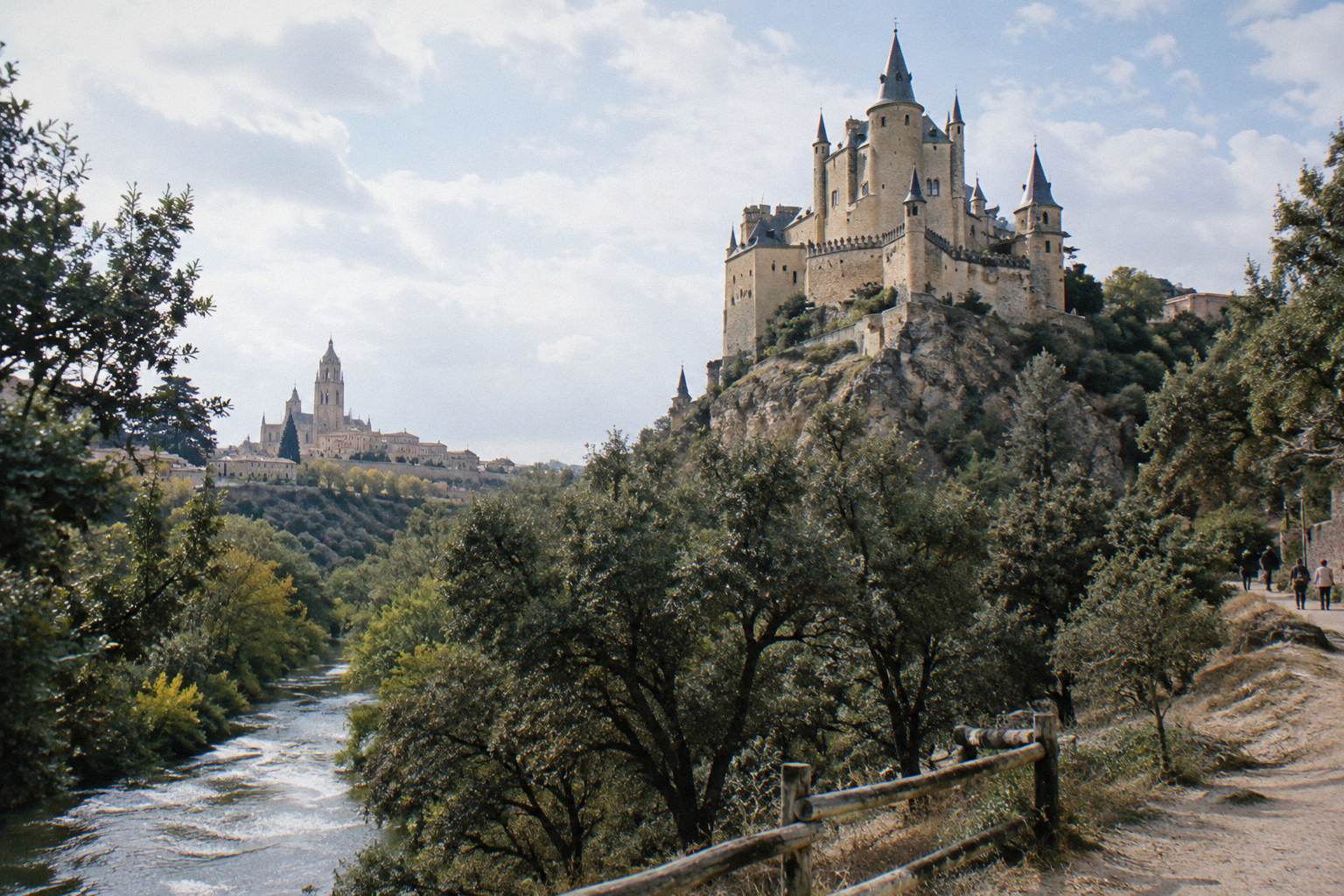
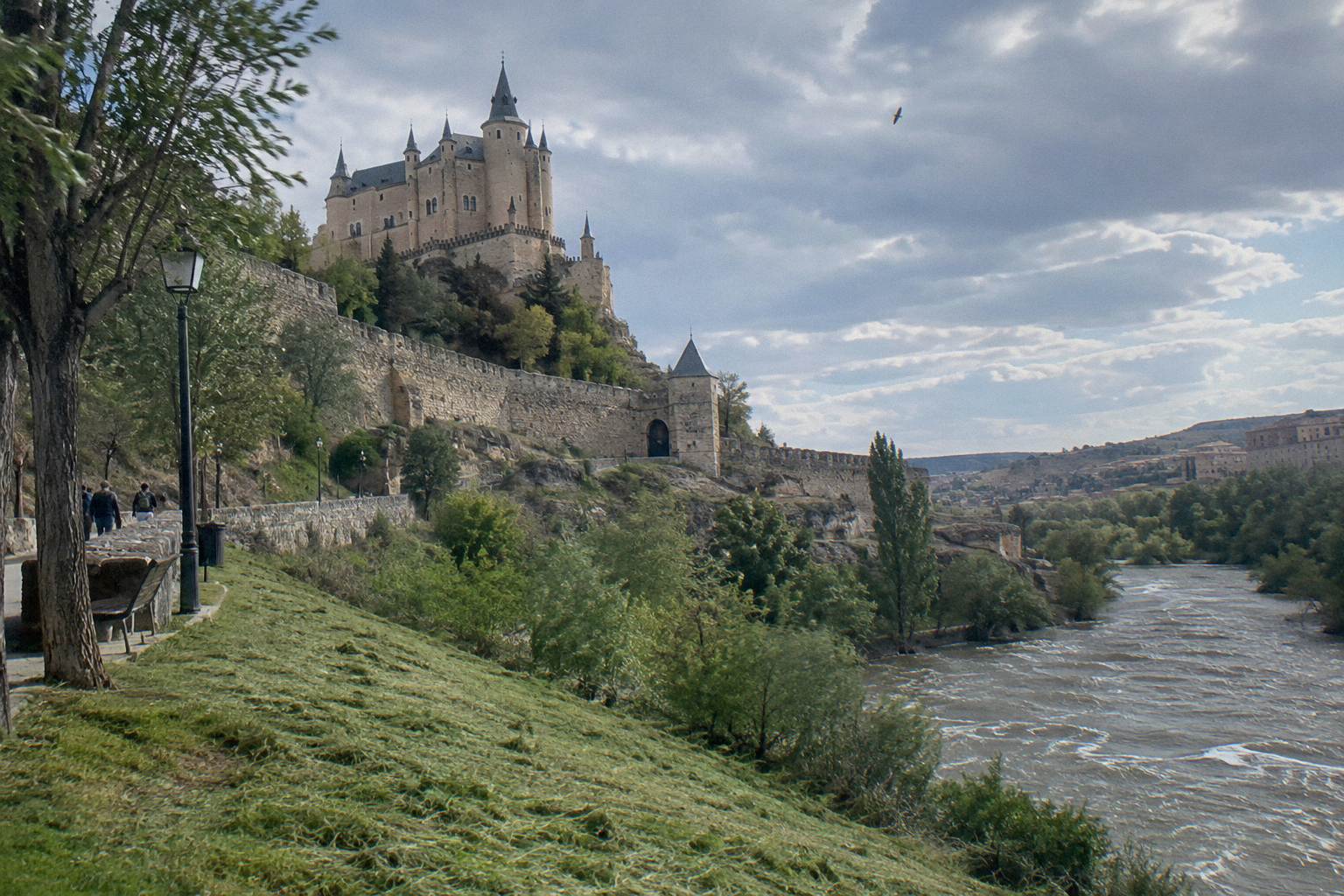
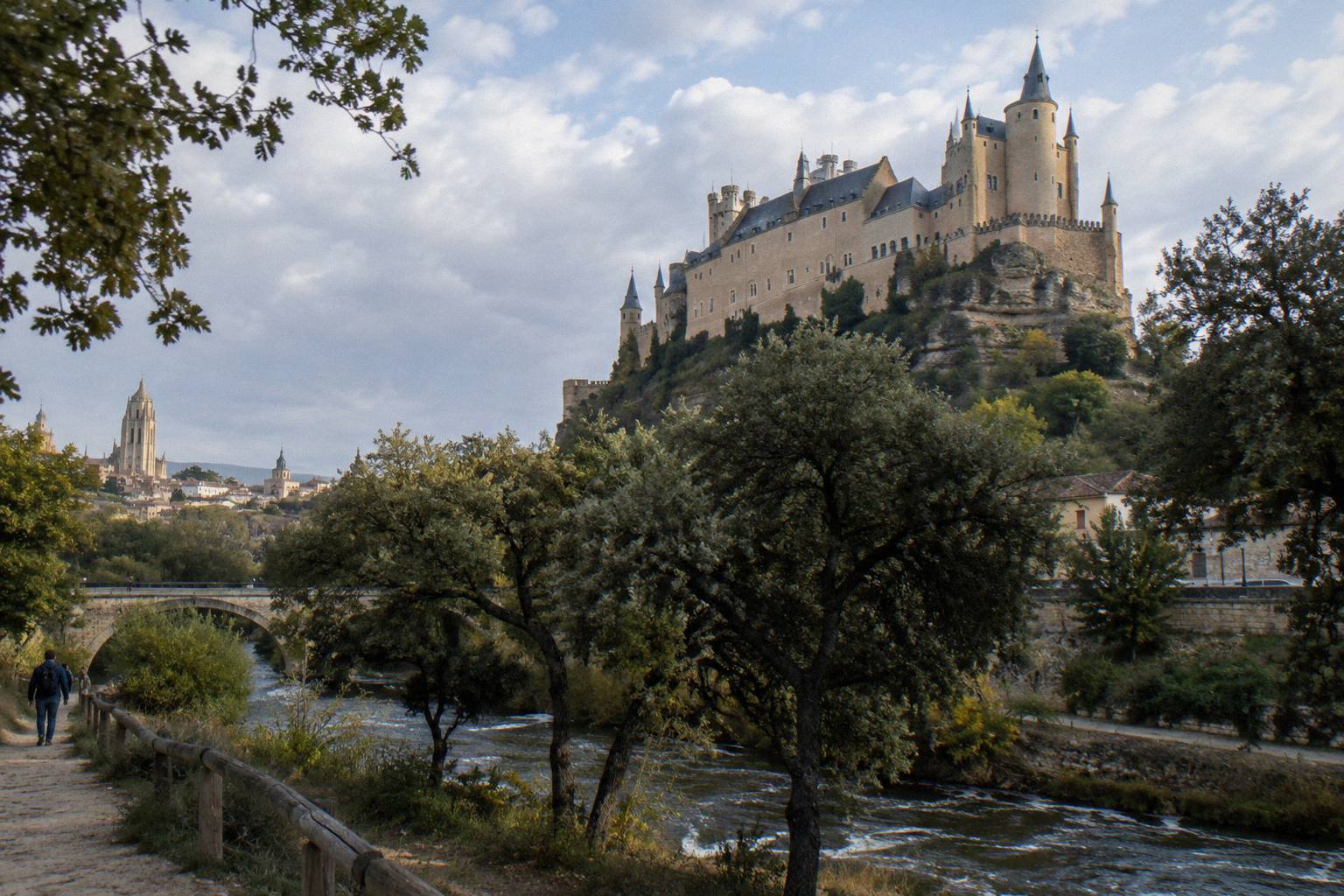
The direction you take the walk is a matter of taste rather than logistics, and nothing in the records prefers one. Starting from the Alcazar end puts the wall's towers above you at the outset and delivers you toward the Juderia streets and the Aqueduct at the finish. Starting from the Aqueduct end reverses the order and puts the Roman structure first. Both ends land on free ground: the Alcazar's outside viewpoints cost nothing to stand at, and the Aqueduct costs nothing to see or walk beneath.
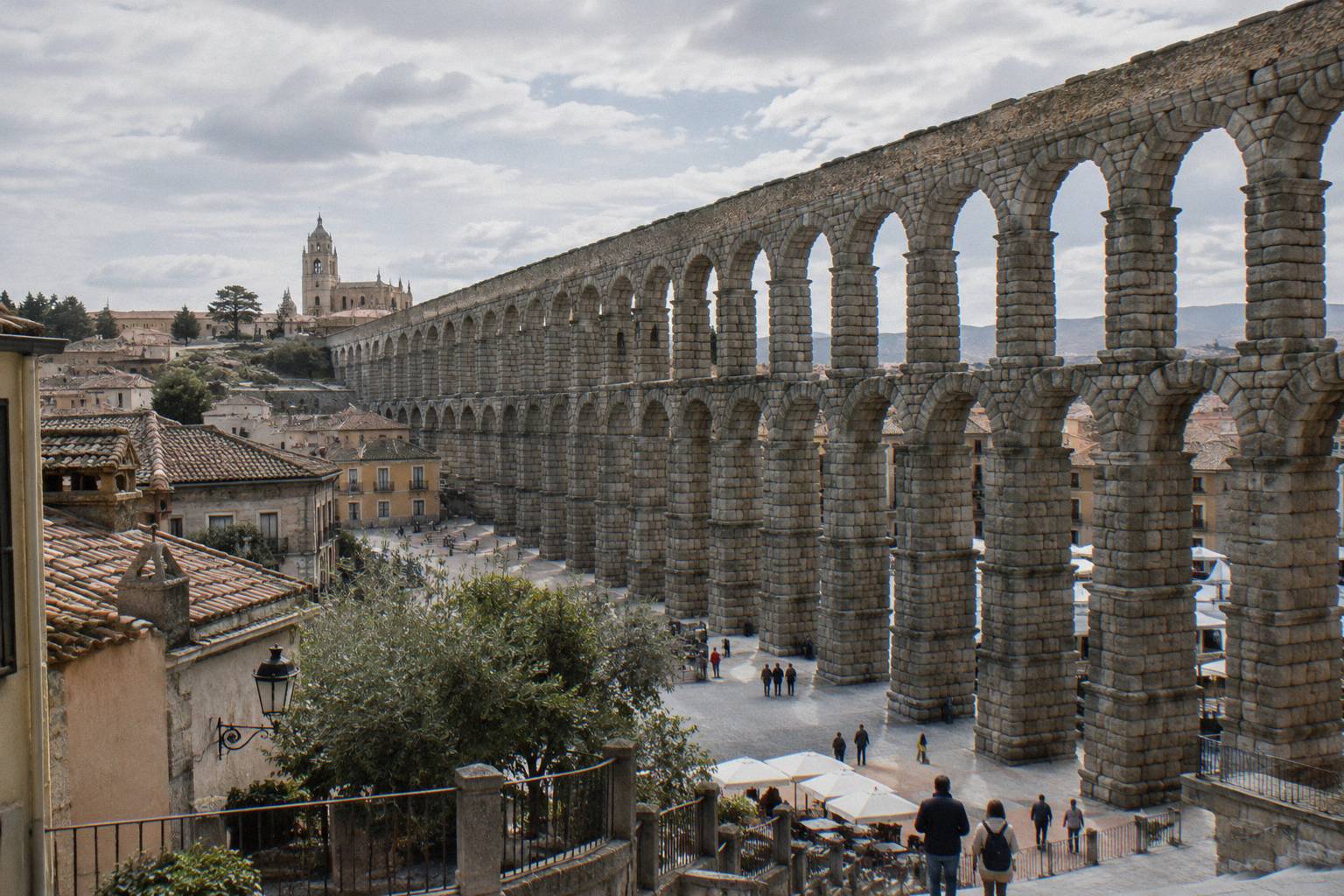
What the path gives you, physically, is the view out. From the wall you look down the slope to the Eresma river paths, across to the Alameda del Parral, and toward the Jewish cemetery viewpoint at El Pinarillo, all of them free places on the valley side. The Pradera de San Marcos, the meadow below the Alcazar, belongs to the same family of free valley ground. The wall is the hinge between the built old town above and the green valley below, and every side of that hinge that a walker touches is free to touch.
For visitors who want the wall's story rather than just its footing, the free walks in English are the natural companion. The city offers 2 free walking tours in English (1 on GuruWalk, 1 on freetour.com). The Bilingual Monumental Walk, listed on freetour.com, runs 1 hour 30 minutes in English and Spanish, meets at Calle Fernán García, corner of Ochoa Ondategui, and carries a rating of 9.2 out of 10 across 126 freetour.com reviews. It is free to join, pay what you want; freetour.com says tip based, and no amount is published on its page.
What Is Free Along The City Walls?
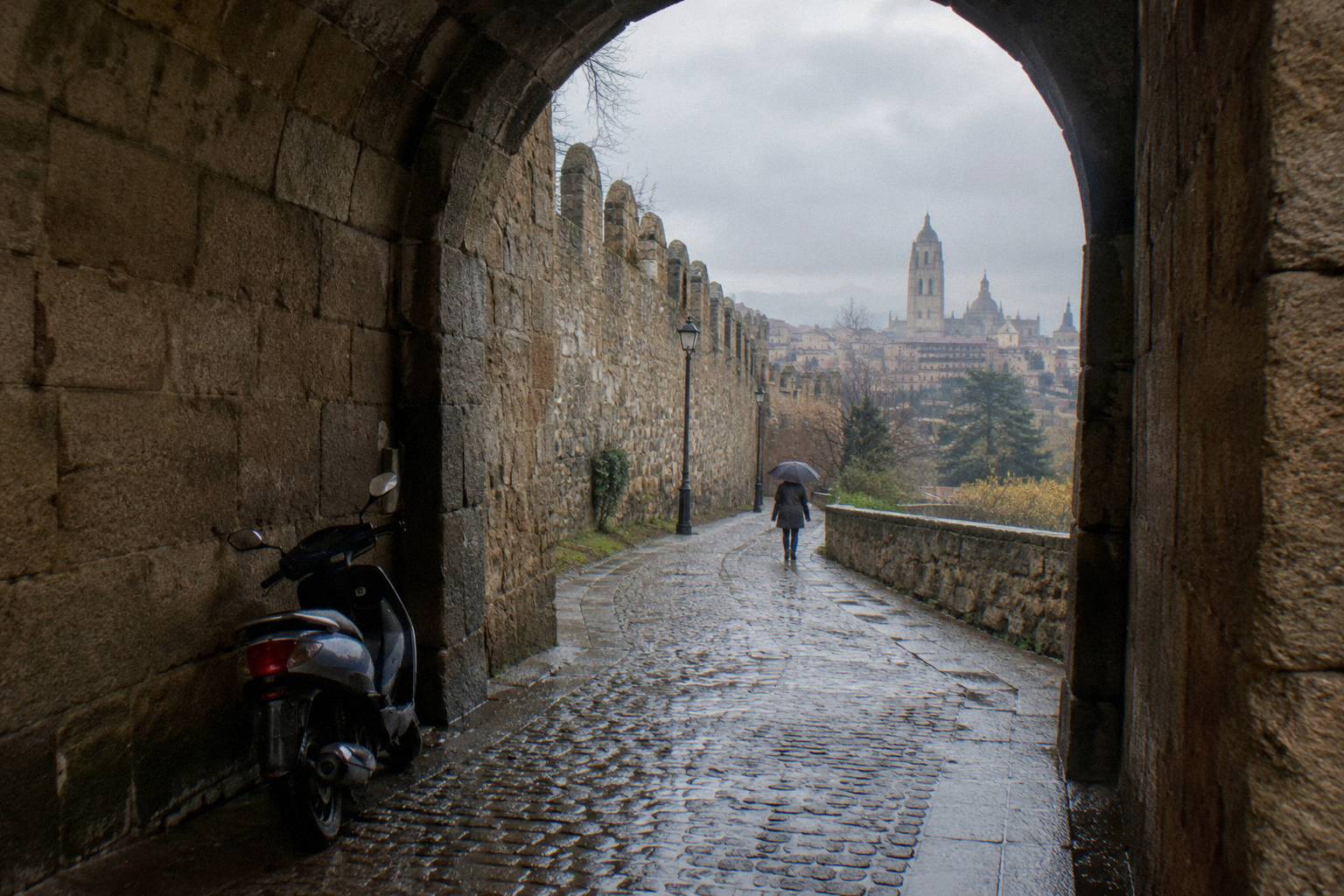
Everything you touch on the wall itself is free: the Paseo de la Muralla path, the wall's exterior faces, the towers as seen from the path or the valley, and the viewpoints along the line. The free set also includes the ground the wall connects to: the Juderia streets, the Mirador de la Canaleja, the Eresma river paths and the Alcazar's outside viewpoints. Nothing on the walker's side of the wall charges a euro.
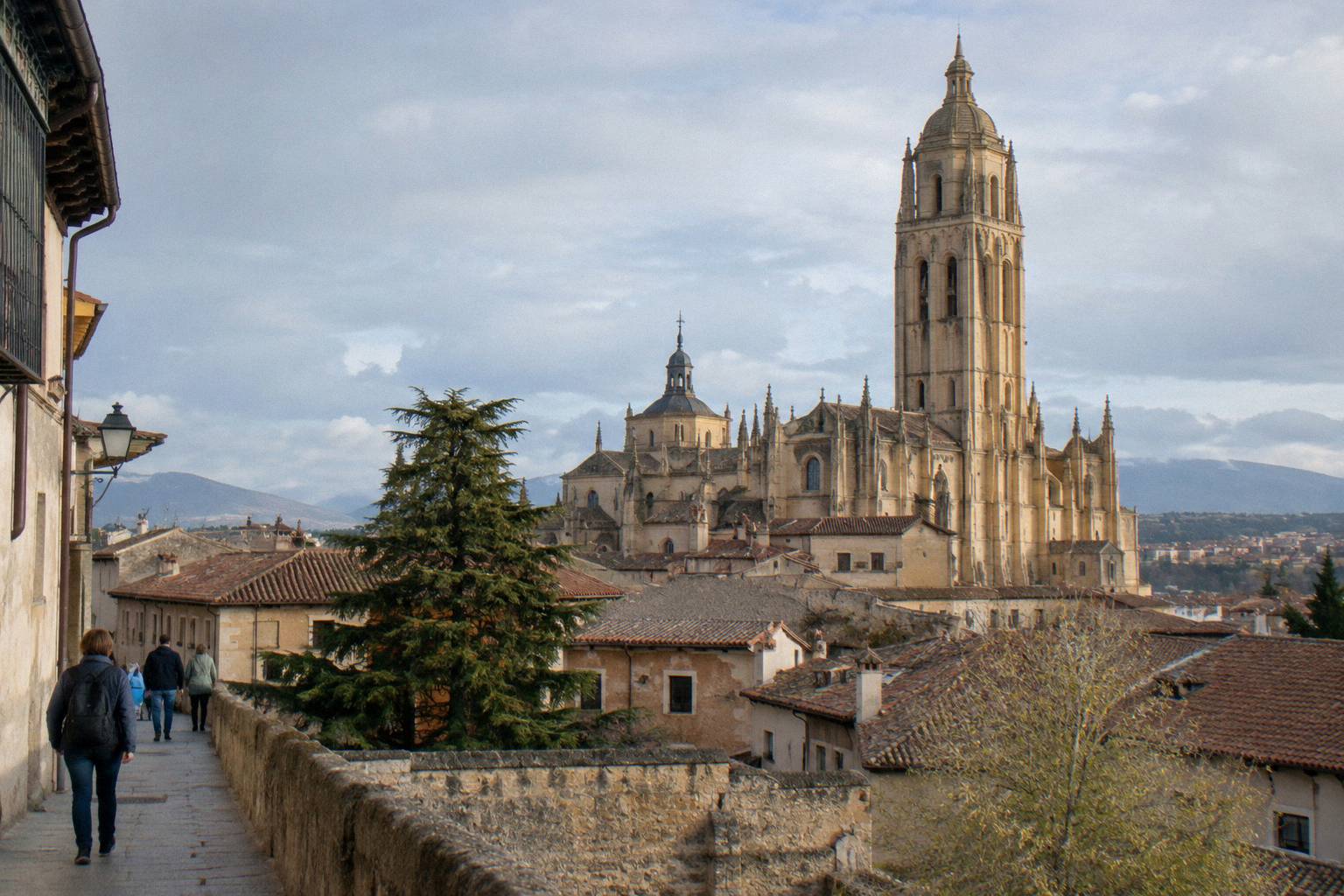
Break the free set down by type and it holds together well. The path is free. The gates are free to pass through. The viewpoints are free. The valley ground below, the river paths, the Alameda del Parral, the Pradera de San Marcos and the Jewish cemetery viewpoint at El Pinarillo, is free. The Juderia, the old Jewish quarter streets that the wall shelters on its inner side, is a free public neighbourhood you can wander at will. The Alcazar exterior and its viewpoints cost nothing, and the Cathedral exterior and its Plaza Mayor frontage are the same: free to see, free to photograph, free to stand in front of.
The only museum in the city that is free without any condition at all is the Museo de Arte Contemporaneo Esteban Vicente, and it sits inside the old town the wall encloses rather than on the wall itself. Around it, the conditional free days cluster on Wednesdays: the Real Casa de Moneda, the Centro Didactico de la Juderia and the Casa-Museo Antonio Machado are all free on non-holiday Wednesdays, and paid on other days. The Museo de Segovia, run by the regional government, is free on weekends and listed holidays and 1 EUR otherwise. Each of those belongs to a different body with its own rule, which is why this article never says "free Wednesdays" as a blanket phrase.
| Free thing | Status | Condition |
|---|---|---|
| Paseo de la Muralla path | Free | None |
| Wall gates, passing through | Free | None |
| Juderia streets | Free | None |
| Eresma river paths and Pradera de San Marcos | Free | None |
| Alcazar exterior and viewpoints | Free | None |
| Museo Esteban Vicente | Free | None, always |
| Real Casa de Moneda | Free on non-holiday Wednesdays | 5 EUR otherwise |
| Museo de Segovia | Free weekends and listed holidays | 1 EUR otherwise |
The pattern to carry with you is simple. The wall, the gates as passages, the viewpoints and the valley are unconditional. The museums inside the circuit are a mixed bag of always free, conditionally free and paid, and each one carries its own condition in the same breath as its name. The wall gives you the free frame; the buildings inside it decide their own terms.
Which Wall Gates Can You Pass For Free?
Every gate in the city wall is free to pass through on foot, because the gates are public passages carrying streets and paths through the wall, not ticketed attractions. The Puerta de San Andres is the one gate whose interior and museum are ticketed, and that is a visit inside the gate structure, not a passage through it. No gate on this circuit charges for walking through.
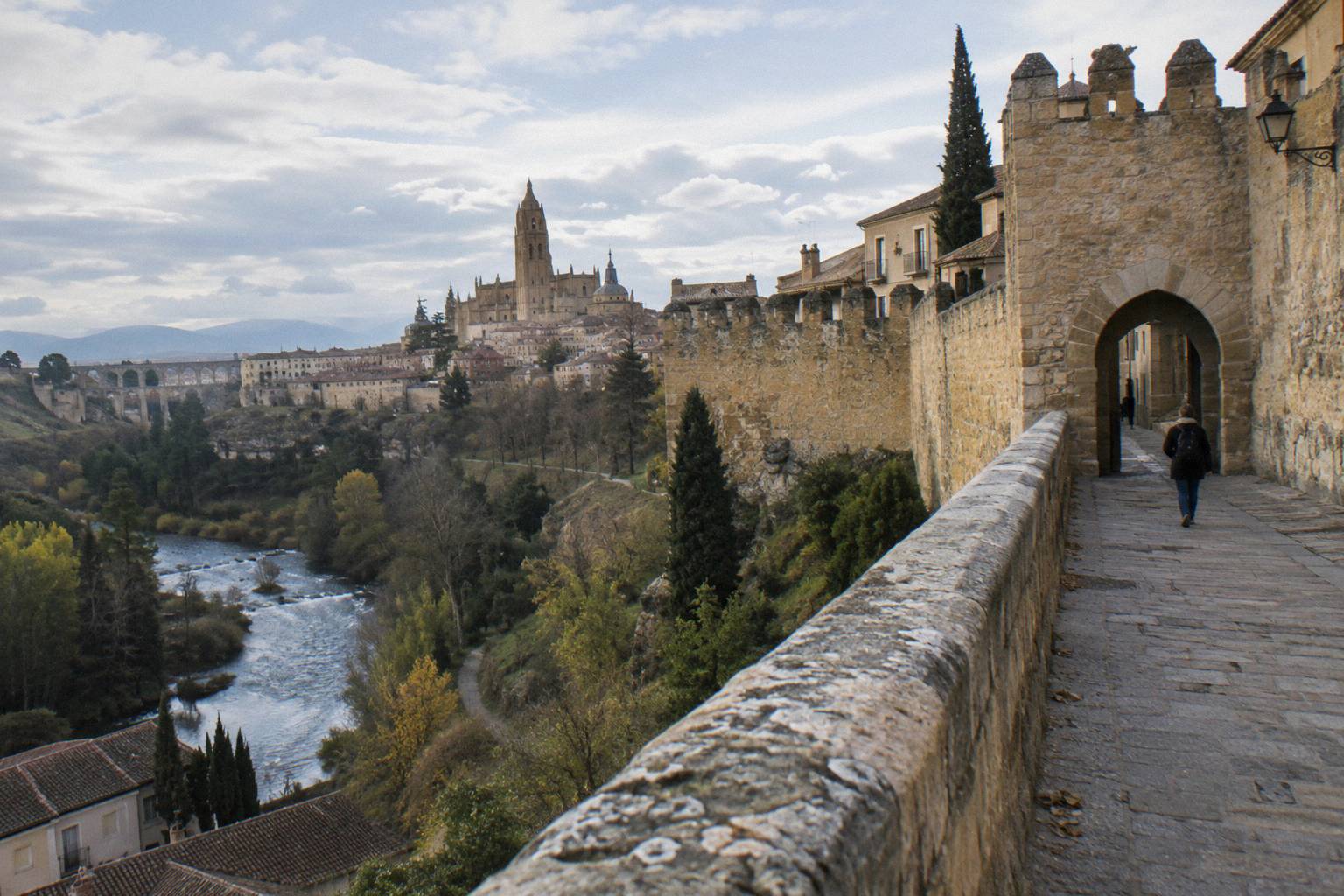
The distinction sounds pedantic until you are standing at the arch. Passing through a gate is movement along a public way, the same legal footing as any street in the old town. Entering a gate's interior, climbing its stairs, visiting its museum rooms, is a different act entirely, and at the Puerta de San Andres that act is ticketed. The price of that interior is not published on an official page, so this article states the ticketed fact and no figure. What is never true is that you must pay to get through the wall: the wall is porous on foot, freely, at every gate that carries a public way. The wider set of guides lives on Free Things To Do In Segovia.
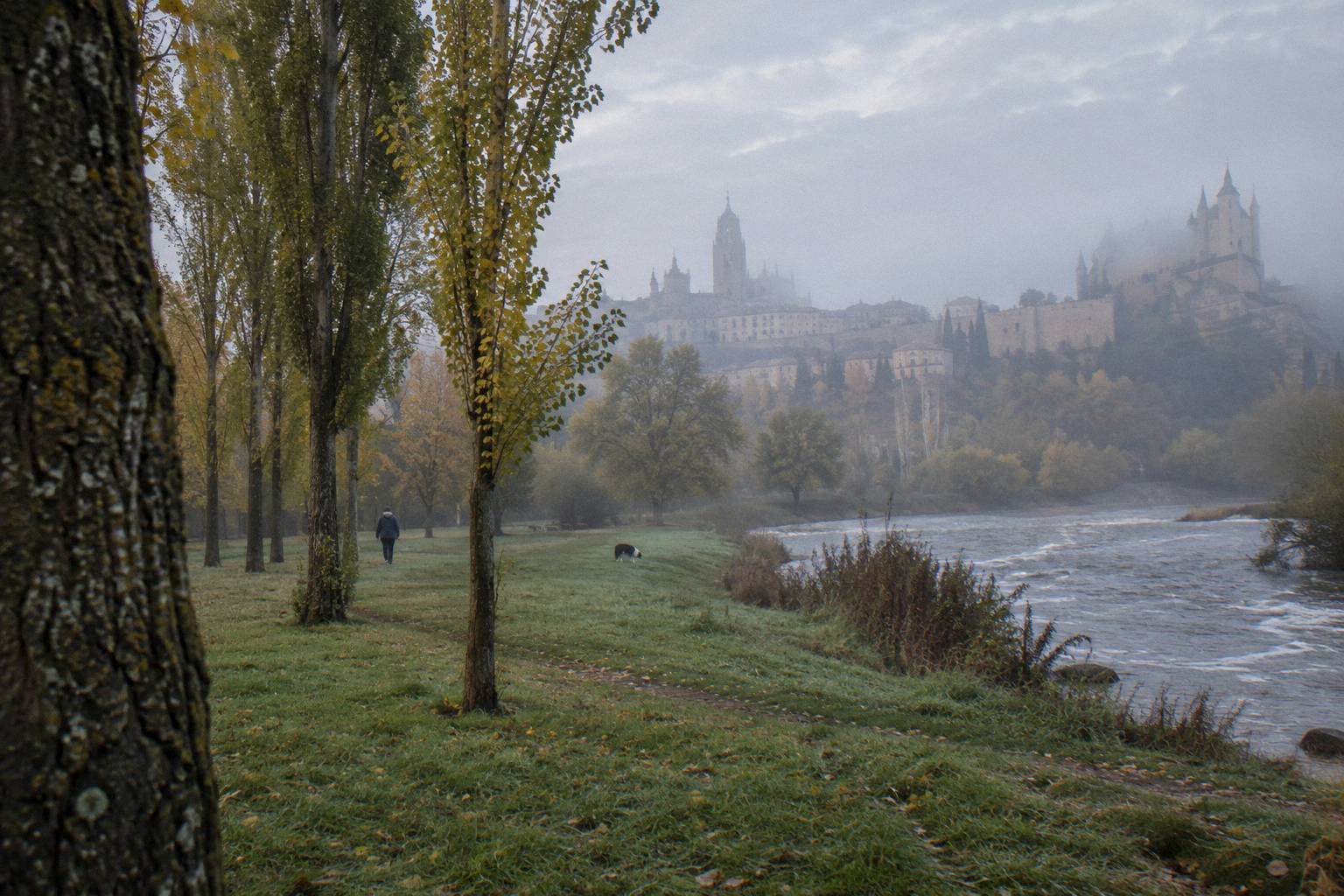
The gates also do useful work as orientation points. The Puerta de San Andres sits on the wall's valley line and gives onto the ground that leads down toward the Eresma paths and the Pradera de San Marcos, so a walker leaving the old town for the valley will likely pass it or its neighbours. On the high side, the wall's line approaches the Alcazar, whose own outside viewpoints are free, and on the north it reaches toward the Aqueduct and the Juderia, both free ground throughout. Gate to gate, the free set is continuous.
For visitors who want a guide's framing of this same ground, the free walks in English both meet inside it. The Bilingual Monumental Walk, listed on freetour.com, meets at Calle Fernán García, corner of Ochoa Ondategui, runs 1 hour 30 minutes in English and Spanish, and is rated 9.2 out of 10 across 126 freetour.com reviews. The Small Group, English Walk, listed on GuruWalk and run by Patricia, meets at Plaza del Azoguejo, next to the tourist office, runs the same 1 hour 30 minutes in English, and is rated 4.7 out of 5 across 10 GuruWalk reviews. Both are free to join, pay what you want, and neither page publishes an amount.
What Is Paid Inside The Walls?
The paid interiors inside the walled circuit are specific and few: the Puerta de San Andres interior and museum, the Cathedral at 4 EUR with its tower visit at 7 EUR guided, the Real Casa de Moneda at 5 EUR outside its free Wednesday, the Museo de Segovia at 1 EUR outside its free windows, and the Alcazar interior outside the EU-citizen Tuesday slot. The Torre de Juan II never has a free slot.
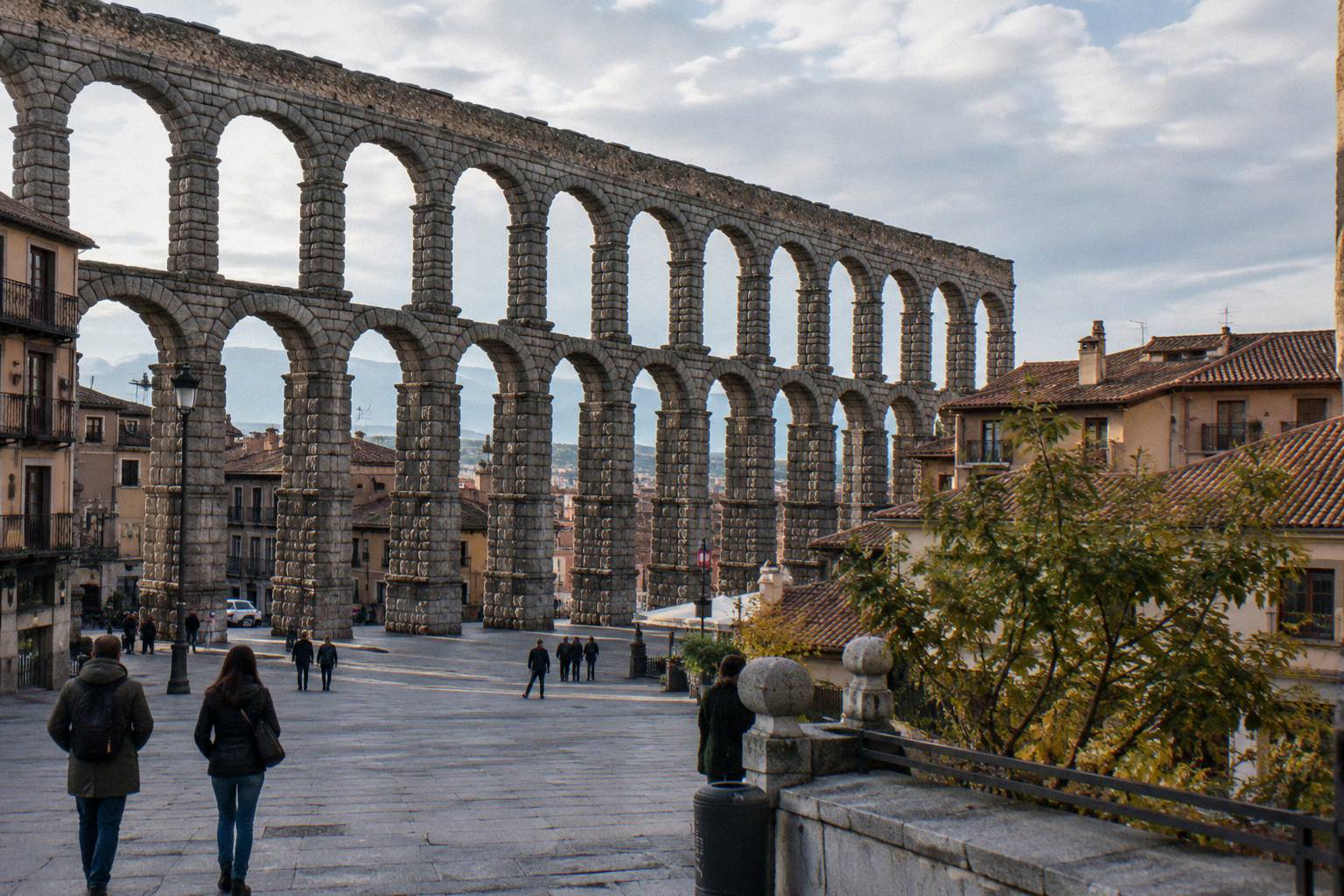
Take them one at a time, because each carries its own condition. The Cathedral's usual visit is 4 EUR, and the guided tower visit is 7 EUR. The Cathedral's free window is narrow and specific: Sunday worship hours only, 09:00 to 10:00 from April to October and 09:30 to 10:30 from November to March, church only with the cloister closed. That is worship access, not a free visit, and it never makes the Cathedral a free attraction. The Real Casa de Moneda is 5 EUR, free on non-holiday Wednesdays, and its ticket includes the Aqueduct Interpretation Centre, which is why the Interpretation Centre is never listed as a free thing: it lives inside that 5 EUR ticket.
The Alcazar is the sharpest conditional in the city. Its free slot runs on non-holiday Tuesdays from 14:00 to 16:00, covers the Palace and Museum only, is limited by capacity, and is for citizens of the European Union, bought individually at the box office during that window. Visitors from outside the EU pay for the interior at any time, and the Torre de Juan II, the tower, is never free for anyone. The Alcazar's exterior and its viewpoints are free unconditionally, so the honest sentence is always the paired one: outside free, inside ticketed except the EU-citizen Tuesday window, tower never free. The Alcazar's general ticket price is not confirmed on an official page, so no figure is printed here.
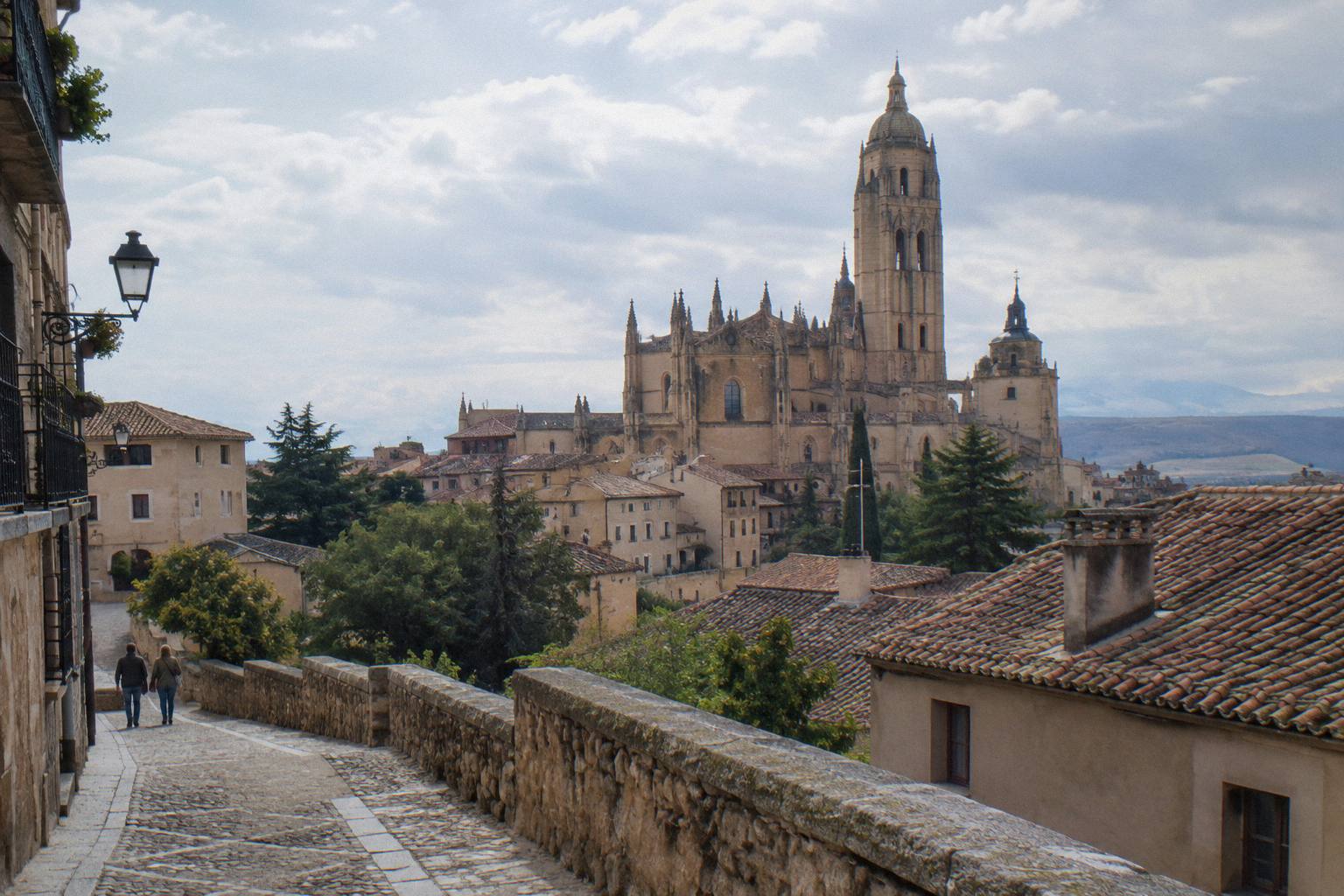
The Puerta de San Andres interior and museum close the list, ticketed with no published price on an official page. Beyond the wall's line, El Parral monastery works by donation at two timed passes a day, Wednesday to Sunday at 11:00 and 17:00, closed Monday and Tuesday, and donation is not the same word as free, so it is written as donation here and never as free. The Museo Zuloaga and the Torreón de Lozoya are ticketed as well. None of these figures is attached to any walk: the two free walks in English are free to join, pay what you want, and no walk includes, enters or covers any paid interior.
| Paid or conditional interior | Price | Free window |
|---|---|---|
| Puerta de San Andres interior and museum | Ticketed, price not published | None |
| Cathedral visit | 4 EUR | Sunday worship hours only, church only |
| Cathedral tower, guided | 7 EUR | None |
| Real Casa de Moneda, includes Aqueduct Interpretation Centre | 5 EUR | Non-holiday Wednesdays |
| Museo de Segovia | 1 EUR | Weekends and listed holidays |
| Alcazar interior | Ticketed, price not published | Non-holiday Tuesdays 14:00-16:00, EU citizens only, box office |
| Torre de Juan II | Ticketed | Never free |
| El Parral monastery | Donation, timed passes | Not free, donation |
How Do The Walls Connect To The Old Town?
The wall is the old town's outer seam, running from the Alcazar's high ground along the valley edge to the Aqueduct and the Juderia, and every link in that chain is free: the Alcazar viewpoints, the Muralla path, the Juderia streets, the Mirador de la Canaleja, Calle Juan Bravo and the Plaza Mayor. A walker can trace the whole line on foot without paying a euro, and the paid interiors sit off the seam, each with its own door.
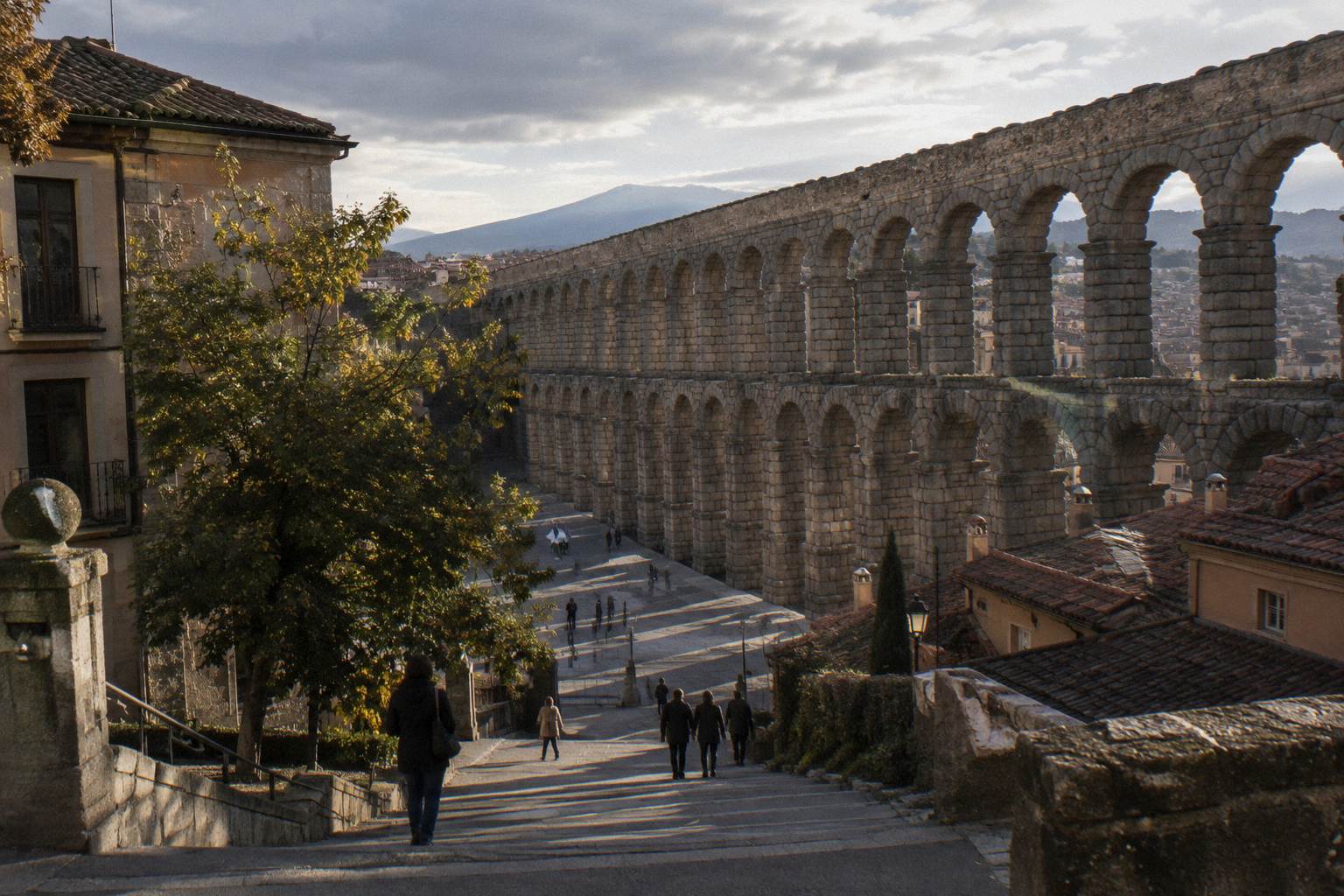
Start at the bottom of the chain and the logic is geographic. The Alcazar stands where the wall's line begins its descent, and its outside viewpoints are free. The wall then runs the valley edge as the Paseo de la Muralla, free throughout, looking out over the Eresma paths, the Alameda del Parral and the Pradera de San Marcos. On the inner side the Juderia spreads through its old streets, free public ground, with the Centro Didactico de la Juderia free on non-holiday Wednesdays as the one conditional in the quarter. The line ends near the Aqueduct at Plaza del Azoguejo, where the Small Group, English Walk on GuruWalk meets, next to the tourist office, and where the Roman structure rises over the free square.
The squares stitch the inside together. Plaza Mayor, with the Cathedral's free exterior frontage, Plaza de Medina del Campo and the Casa de los Picos, free as an exterior, its interior not confirmed, all sit within the walled ground and cost nothing to see. The Mirador de la Canaleja gives a free outlook over the valley from the old town side. Calle Juan Bravo runs the ridge from the Aqueduct toward the Plaza Mayor, the main free artery of the whole circuit. Nothing on that list charges, and together they make the wall's inner world as free as its outer path.
The Alcazar and La Granja ground this connects to deserves its own honesty. The Alcazar's exterior viewpoints are free; the interior is ticketed except for the EU-citizen Tuesday slot, and the tower never free. La Granja de San Ildefonso sits outside the city, its gardens' hours are official but free admission is not confirmed by an official page, and its fountain shows are ticketed, with the fountains off in winter. The wall's free chain ends at the Alcazar's viewpoints; it does not extend into any of those interiors, and this article never writes as though it does.
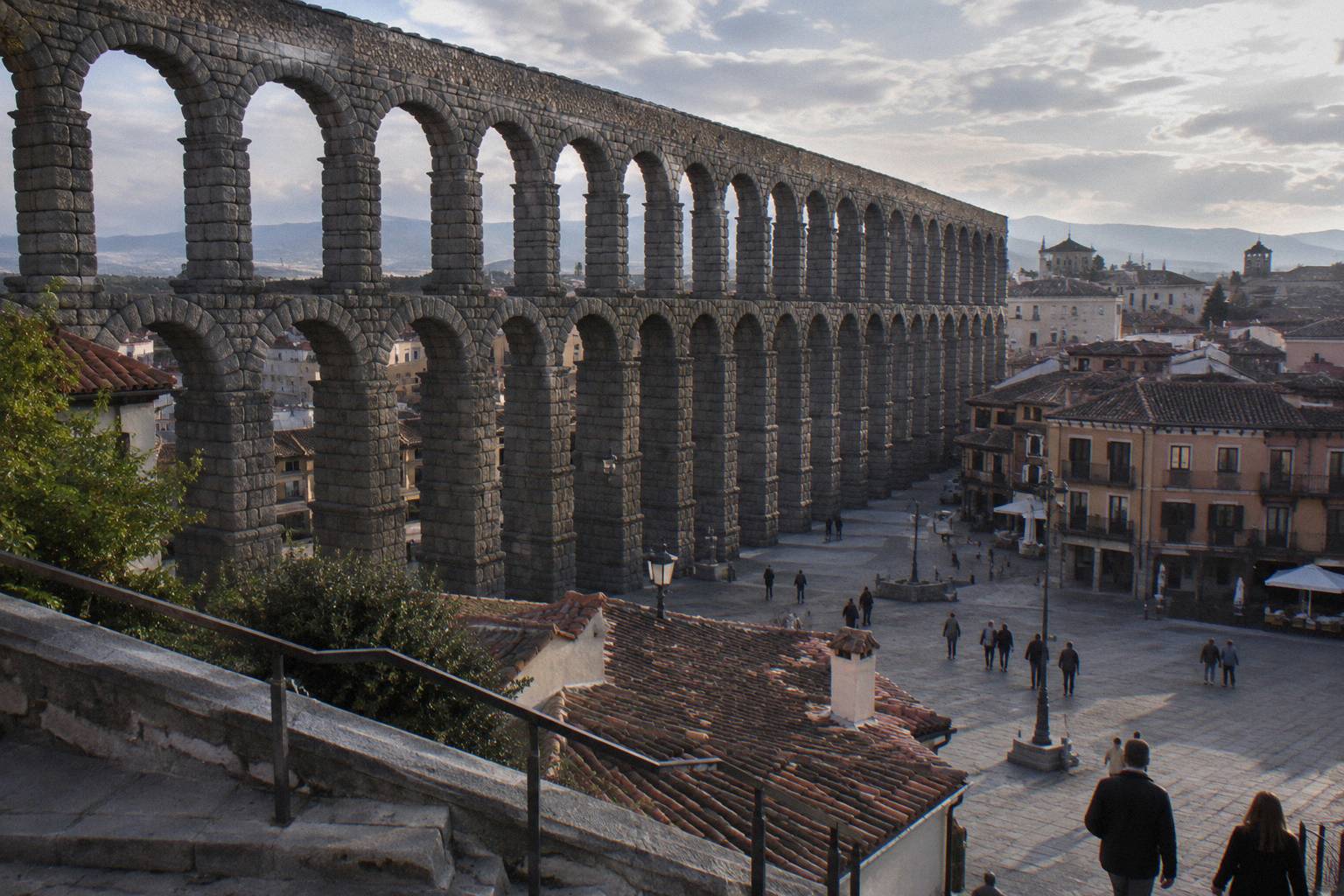
For a guided version of the same ground, the two free walks in English are the city's offer: 2 free walking tours in English (1 on GuruWalk, 1 on freetour.com). The freetour.com walk, the Bilingual Monumental Walk, is rated 9.2 out of 10 across 126 freetour.com reviews and runs 1 hour 30 minutes in English and Spanish. The GuruWalk walk, Patricia's Small Group, English Walk, is rated 4.7 out of 5 across 10 GuruWalk reviews and runs 1 hour 30 minutes in English from Plaza del Azoguejo. Both are free to join, pay what you want, reserved on their own platform's page.
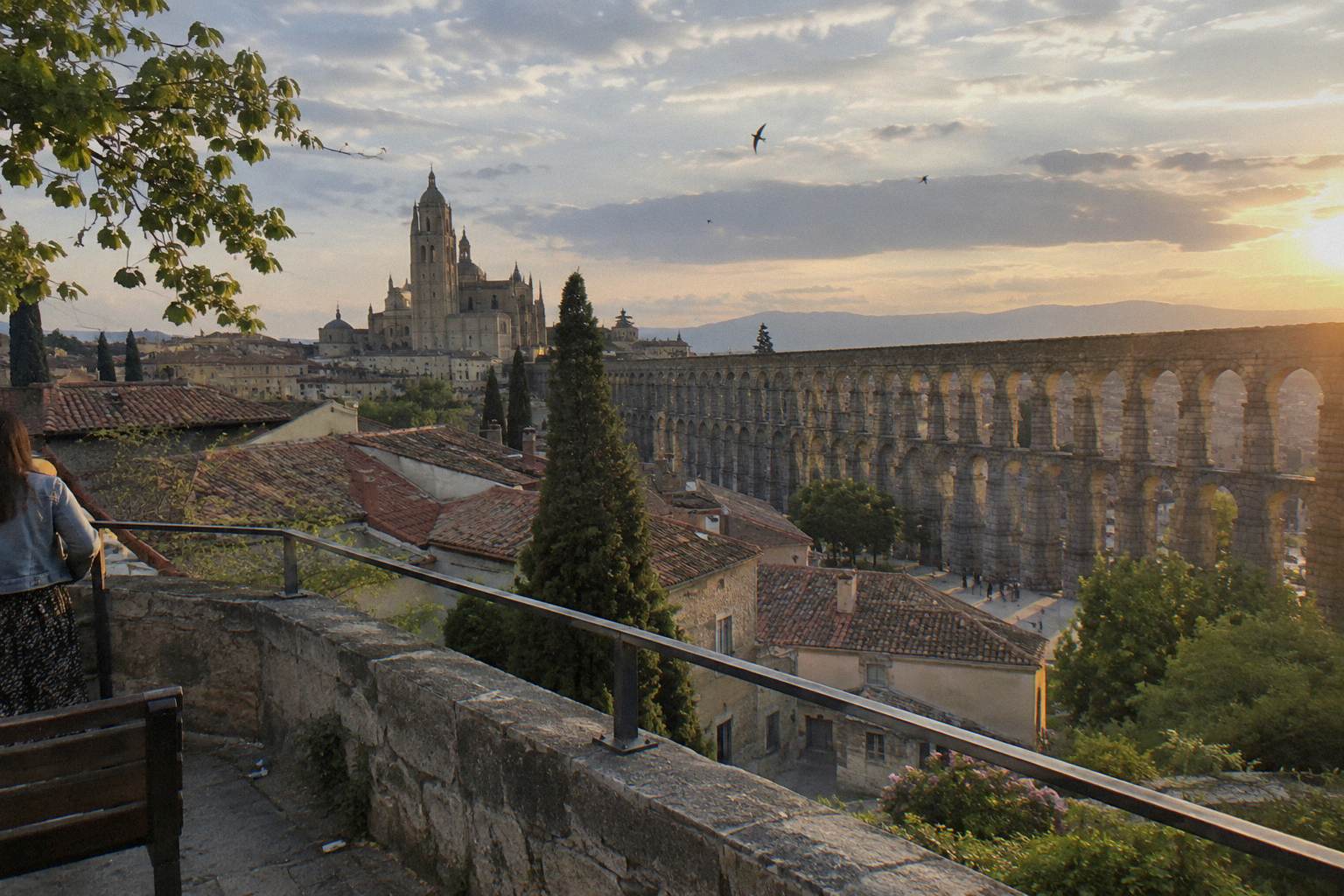
More on the wider free picture is in the free things to do in Segovia in one day guide, and the question of whether a free tour or a paid guided tour suits you is covered in its own post. This article's ground is the wall and its gates, and the wall, one last time, is free.
Mistakes That Trip People Up At The City Walls
The four recurring mistakes are all versions of the same error: letting a free exterior pass its status to a paid interior. People assume the Puerta de San Andres interior is free because the gate passage is, assume the Alcazar is free on Tuesdays without the EU-citizen condition, assume the Aqueduct Interpretation Centre is free because the Aqueduct is, and assume the Cathedral is free because its exterior is. The split never softens.
The first mistake is the gate. Passing through the Puerta de San Andres is free; visiting its interior and museum is ticketed, with no published price on an official page. Walkers who treat the gate as one attraction get caught at the door, and the honest framing is the paired sentence this article has used throughout: free to pass, ticketed inside.
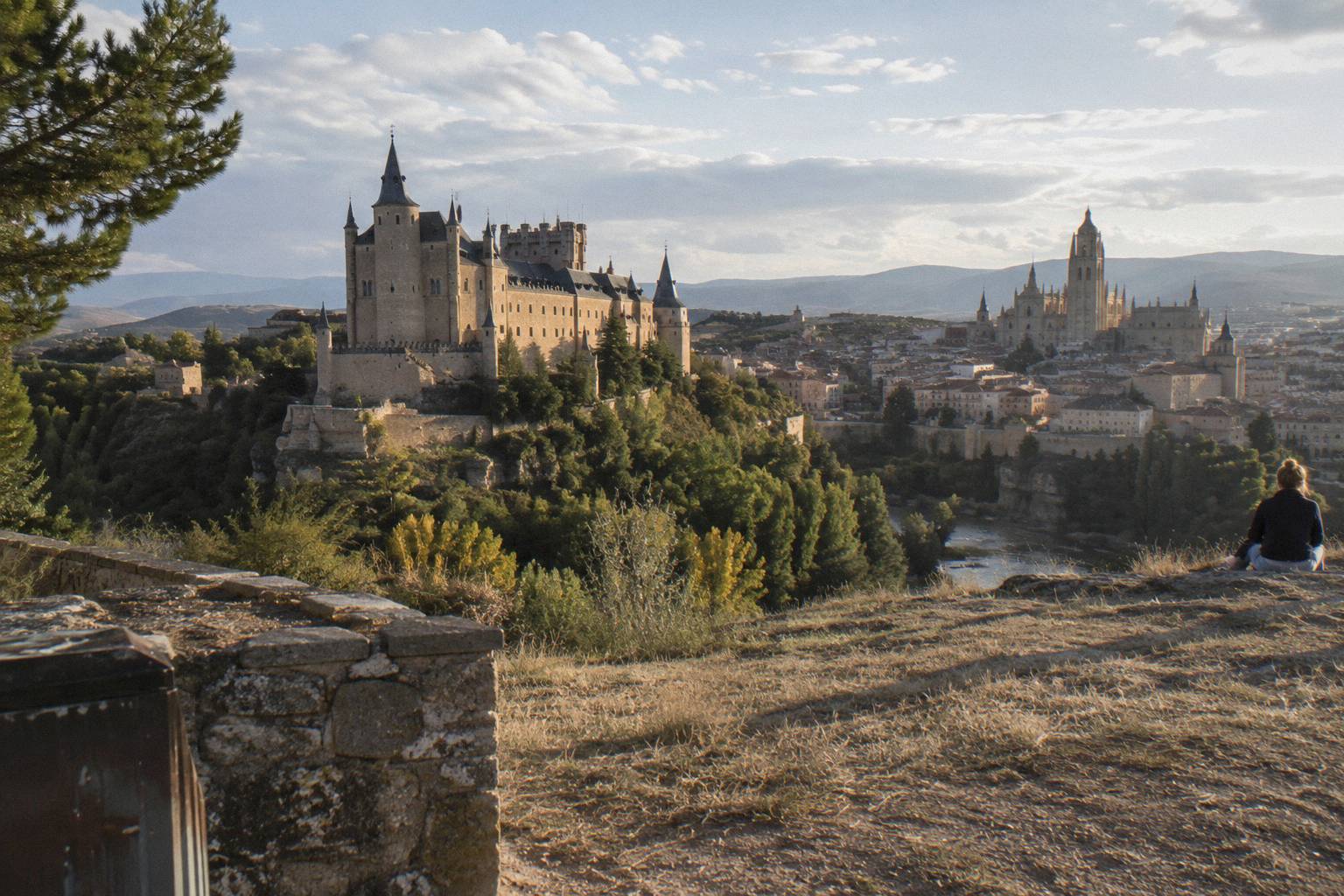
The second is the Alcazar Tuesday slot. The free entry runs on non-holiday Tuesdays from 14:00 to 16:00, Palace and Museum only, bought individually at the box office, capacity-limited, and for citizens of the European Union only. Visitors from outside the EU pay, and the Torre de Juan II never has a free slot. Anyone who reads "free Tuesday at the Alcazar" without the EU condition has read half the rule.
The third is the Interpretation Centre. The Aqueduct is free to see and walk beneath, and the Interpretation Centre sits inside the 5 EUR Real Casa de Moneda ticket. The pair is real and the split is permanent: the monument outside is free, the museum about it is not, except on non-holiday Wednesdays when the Casa de Moneda itself opens free.
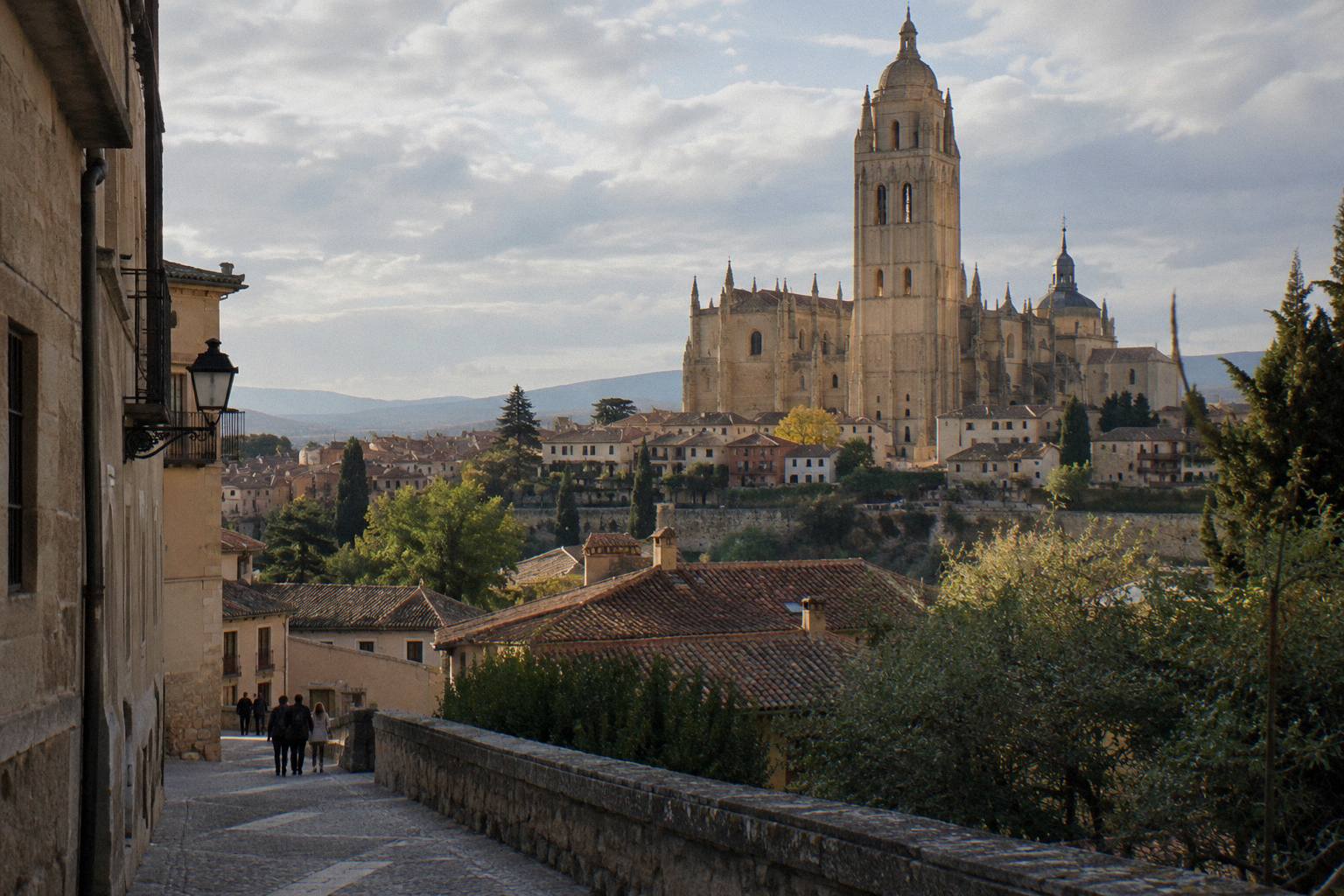
The fourth is the Cathedral. Only Sunday worship hours let anyone into the church, 09:00 to 10:00 April to October and 09:30 to 10:30 November to March, church only with the cloister closed, and the usual visit is 4 EUR with the guided tower at 7 EUR. The exterior and the Plaza Mayor frontage are free; the interior visit is a ticket. Avoid all four mistakes and the wall circuit delivers exactly what it promises: a complete free walk around one of the most striking old towns in Spain, with every paid door clearly labelled before you reach it.
Common Questions About The Segovia City Walls
Is The Muralla Walk In Segovia Free?
Yes, the Paseo de la Muralla is a free public path along the top of the city wall, with no ticket, no booking and no gate fee anywhere on the walk itself. The only charged element on the wall's line is the Puerta de San Andres interior and museum, which is a separate visit inside the gate structure, not a passage through it.
Can You Walk Through The Wall Gates For Free?
Yes, every gate in the city wall is free to pass through on foot, because the gates carry public streets and paths through the wall. The Puerta de San Andres is ticketed only for its interior and museum visit; walking through the arch itself, like any other gate, costs nothing.
Is The Puerta De San Andres Interior Free?
No, the Puerta de San Andres interior and its museum are ticketed, and no price is published on an official page, so no figure is printed here. The gate's passage is free, and the split between the free passage and the ticketed interior is permanent: a free exterior never passes its status to the interior beside it.
Do Any Free Walking Tours Cover The Walls?
The city offers 2 free walking tours in English (1 on GuruWalk, 1 on freetour.com), and both meet inside the ground the walls enclose, in the Aqueduct and old town neighbourhood. The GuruWalk walk, Patricia's Small Group, English Walk, meets at Plaza del Azoguejo, next to the tourist office, and runs 1 hour 30 minutes in English.
What Does A Walking Tour In Segovia Cost?
Nothing to join. Both free walks in English are free, pay what you want; freetour.com says tip based for its walk, and no amount is published on the GuruWalk or freetour.com pages. The reader decides what to pay, and no walk includes, enters or covers any paid interior such as the Alcazar or the Cathedral.
Which Parts Inside The Walls Are Paid?
The Cathedral visit is 4 EUR with the guided tower at 7 EUR, the Real Casa de Moneda is 5 EUR outside non-holiday Wednesdays, the Museo de Segovia is 1 EUR outside weekends and listed holidays, and the Alcazar interior is ticketed except for the EU-citizen Tuesday slot from 14:00 to 16:00, with the Torre de Juan II never free.